
Choosing Durable Pots for Indoor Plants: 2026 Guide

Table of Contents
- Best Materials for Indoor Plant Pots: A Durability Comparison
- How to Check Plant Pot Drainage Before You Buy
- Choosing the Right Size Plant Pot for Root Health
- Weight, Stability and Load-Bearing for Large Indoor Trees
- Longevity, Degradation and Eco-Friendly Disposal
- Chemical Leaching and Safer Pot Choices
- Conclusion
- Frequently Asked Questions
Last Updated: September 11, 2026
Best Materials for Indoor Plant Pots: A Durability Comparison
Choosing durable pots for indoor plants starts with knowing which materials survive years of watering, repotting and root growth without cracking, fading or falling apart. This guide from Quirky Turkey Gifts breaks down how plastic, terracotta, ceramic and fibreglass actually behave over time, so you can buy once and stop replacing cracked pots every spring.
The short answer: glazed ceramic and fibreglass last longest, terracotta offers the best breathability, and quality plastic resin is the budget workhorse. What most guides miss is that "durable" means two different things, physical strength and resistance to moisture cycling, and few materials score well on both.
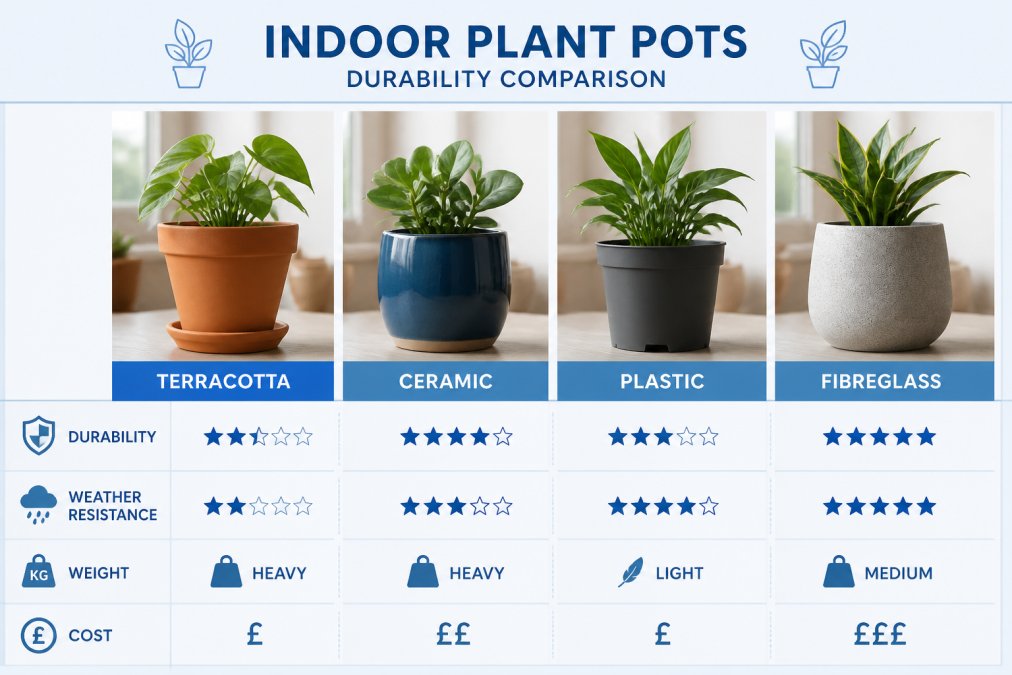
Plastic and Resin Pots
Plastic and resin pots are lightweight, affordable and surprisingly tough. A common mistake is buying thin nursery-grade plastic, which goes brittle and shatters within a season or two of UV exposure and repotting. Thicker resin and fibreglass-reinforced plastic hold their shape, resist cracking and weigh very little, which matters if you move plants around.
Where they fall short is breathability. Plastic traps moisture against the root ball, so drainage holes and a light potting mix become non-negotiable. Look for pots with a matte finish and a stated UV resistance rating if the pot will sit near a bright window.
Terracotta and Ceramic Pots
Terracotta is the traditional choice for a reason: its porosity lets air and moisture move through the walls, which helps prevent root rot in thirsty plants. The trade-off is fragility. Unglazed terracotta chips easily, stains with mineral buildup from hard water, and can crack in a cold snap if left outdoors.
Glazed ceramic solves the staining and adds structural integrity, but the glaze seals the walls, so you lose most of the breathability. If you want the look of ceramic with better moisture control, choose a glazed pot with a generous drainage hole and use a saucer to catch runoff.
Fibreglass and Glazed Stoneware
Fibreglass and glazed stoneware are the durability champions for large indoor planters. Fibreglass is strong for its weight, resists UV degradation and won't corrode, which makes it ideal for heavy floor-standing pots. Stoneware fired at high temperature is dense, chip-resistant and holds its glaze for years.
The drawback is cost and weight. A large stoneware planter can be genuinely difficult to move once planted, and fibreglass, while lighter, can flex if the walls are thin. Check the base for a moulded foot ring, which improves stability and weight distribution.
| Material | Durability | Breathability | Weight | Best For |
|---|---|---|---|---|
| Plastic / resin | Moderate to high | Low | Very light | Budget setups, small plants |
| Terracotta | Moderate | High | Medium | Thirsty plants, root health |
| Glazed ceramic | High | Low | Medium to heavy | Decorative displays |
| Fibreglass | High | Low | Light | Large floor planters |
| Glazed stoneware | Very high | Low | Heavy | Statement pieces, trees |
How to Check Plant Pot Drainage Before You Buy
Checking drainage takes thirty seconds and saves a plant's life. Turn the pot over and confirm there is at least one hole, ideally one central hole of 2cm or more, or several smaller holes spread across the base.
A single tiny hole is a red flag. It clogs with potting mix and compacted roots, and water sits in the base until the root ball turns sour. If a decorative pot has no holes at all, treat it as a cachepot: keep the plant in a nursery pot inside it and lift the inner pot out to water.
- Check the hole diameter against the pot's diameter; bigger pots need bigger holes
- Look for a raised foot ring so water can escape rather than pooling
- Avoid pots with a sealed saucer glued to the base
- Test with water before planting: fill, drain, and watch how fast it empties
Choosing the Right Size Plant Pot for Root Health
The right pot size is one 2-4cm wider in diameter than the current root ball. Going bigger seems generous, but oversized pots hold excess potting mix that stays wet around the roots, which invites rot and slows growth. A useful rule of thumb: the new pot should be no more than 5cm larger in diameter for small plants, and no more than 8cm larger for large specimens.
When repotting, gently loosen the root ball and check for circling roots, a sign the plant was root bound. If roots are tightly wound, tease them apart or trim the outer ring before planting. A pot that is too small dries out fast and constricts growth, so aim for a modest step up rather than a dramatic one.
Depth matters too. Most houseplants prefer a pot roughly two-thirds as deep as it is wide. Tall, narrow pots look elegant but dry unevenly and can topple with a top-heavy plant. For deep-rooted plants like sansevieria or ficus, choose a pot that allows at least 5cm of root clearance below the root ball.
Material choice interacts with root health. Terracotta wicks moisture away from the root zone, so plants in terracotta may need a pot one size larger than the same plant in plastic, because the walls dry out faster. Plastic and glazed ceramic retain moisture, so a slightly smaller pot can be used without risking root rot. Fibreglass and stoneware are neutral, behaving like plastic but with more weight.
A common pattern is to match pot diameter to at least one-third of the plant's height for stability, but this is a guideline, not a rule. For trailing plants like pothos, a wider, shallower pot encourages fuller growth. For upright plants like rubber plants, a deeper pot supports the taproot.
If you are unsure whether a pot is the right size, place the empty pot next to the plant's current nursery pot. The new pot should be just large enough that the root ball sits comfortably with 2-3cm of fresh potting mix around the sides. Any more and you risk over-potting, which is a leading cause of root rot in indoor plants.
Weight, Stability and Load-Bearing for Large Indoor Trees
Large indoor trees need pots that won't tip, crack or buckle under load. A mature fiddle leaf fig or monstera carries real weight in its root ball and canopy, and a lightweight pot with a narrow base is an accident waiting to happen. The unique angle most guides miss: structural durability is not just about the pot's material, but about the ratio of pot weight to plant weight, and how the base geometry distributes load.
Choose a pot with a wide, flat base and a low centre of gravity. For trees over 1.5m, glazed stoneware or thick fibreglass is the safer bet, as both handle the weight distribution better than thin plastic. If the pot must stay light for moving, place a heavy stone or a layer of gravel in the base to lower the centre of gravity. A common pattern is to aim for a pot that weighs at least one-third of the total plant weight when fully watered.
Material thickness matters more than material type for load-bearing. A 5mm-thick fibreglass pot can flex and crack under a heavy root ball, while a 10mm-thick fibreglass pot will hold its shape for years. For stoneware, look for walls at least 8mm thick at the base. Thin plastic pots, even large ones, will bow outward over time as roots expand, eventually cracking at the rim.
- Match pot diameter to at least one-third of the plant's height for stability
- Check that the base sits flat with no wobble
- Use a pot saucer with a lip to protect floors from water marks
- For very tall plants, consider a weighted inner liner
- Avoid pots with a narrow foot ring; a wide, flat base distributes load better
- For trees over 2m, use a pot with a base diameter at least half the pot's top diameter
Weight-bearing capacity also depends on the pot's material degradation over time. Plastic pots lose structural integrity as UV exposure breaks down the polymer, becoming brittle at the base where stress concentrates. Fibreglass resists UV degradation but can delaminate if the resin is low quality. Glazed stoneware is the most dimensionally stable, but a single chip at the base can create a crack that spreads under load.
For very large indoor trees, consider a pot with a moulded foot ring and a recessed base. This design spreads the load across a wider area and prevents the pot from sitting directly on a wet floor, which can cause staining and material degradation. If the pot must be moved for cleaning, place it on a furniture dolly or a plant caddy rated for the total weight of pot, soil, and plant.
Longevity, Degradation and Eco-Friendly Disposal
Longevity separates a durable pot from a disposable one. Plastic degrades fastest, becoming brittle and discoloured as UV exposure breaks down the polymer; terracotta chips and stains; glazed ceramic and stoneware can last decades if not dropped.
Sustainability matters at the end of a pot's life. Terracotta and unglazed ceramic can be broken up and used as drainage crocks or garden rubble. Plastic resin is harder to recycle and often ends up in general waste, so buying a thicker pot that lasts longer is itself the greener choice. Fibreglass sits somewhere between the two: long-lasting, but difficult to recycle in most household schemes.
Chemical Leaching and Safer Pot Choices
Chemical leaching is a real concern with non-food-grade pots, particularly cheap glazes and recycled plastics. Some imported glazes have historically contained lead or cadmium, which can leach into soil and, in edible plants, into the food chain.
For houseplants the risk is low, but for herbs and anything edible, choose pots labelled food-safe or lead-free. Unglazed terracotta is generally inert, though it can absorb minerals and fertiliser salts over time and should be scrubbed occasionally. Avoid any pot with a strong chemical smell, which often signals low-grade resin.
If you are unsure about a glaze, line the pot with a food-safe nursery pot and keep the decorative outer pot as a cachepot. This also makes watering and repotting far easier.
Conclusion
Choosing durable pots for indoor plants comes down to matching material to plant, room and budget, then checking drainage, size and stability before you commit. Get those right and a good pot will outlast the plant it was bought for.
At Quirky Turkey Gifts, we stock characterful, long-lasting plant pots and garden-inspired gifts designed to bring joy to any space, backed by over 100,000 happy customers and super-fast express delivery. Our range includes the Hydrating Herbert and Hydrating Hettie self-watering pots at £14.99, each 21cm tall and built to keep houseplants hydrated with minimal fuss, plus the terracotta Willy the Garden Worm water sensor at £2.75 for anyone who wants a simple visual cue before watering.

Frequently Asked Questions
What are the common mistakes in choosing plant pots?
The most frequent mistakes are buying a pot with no drainage holes, choosing one that is far too large for the root ball, and picking a material that suits the look but not the watering routine. A pot without drainage traps water and causes root rot, while an oversized pot keeps soil wet for too long. Always check the base for holes, match the diameter to the root ball, and pick a material that matches how often you can water.
Which material pots are best for indoor plants?
It depends on your priorities. Terracotta and unglazed ceramic offer porosity and breathability, which helps prevent overwatering but means more frequent watering. Glazed ceramic and fibreglass hold moisture longer and resist staining. Plastic and resin are lightweight and cheap but degrade faster under UV light. For durability indoors, glazed stoneware and fibreglass last longest, while terracotta remains the best choice for plants prone to root rot.
How do I ensure my plant pot has proper drainage?
Look for at least one drainage hole at the base, ideally several for larger pots. If a decorative pot has no holes, use it as a cachepot and keep the plant in a nursery pot inside it. Always empty the saucer after watering so the root ball is not sitting in water. You can also add a layer of grit at the base, though this does not replace drainage holes.
Do I need a saucer for my indoor plant pot?
A saucer protects surfaces from water marks and mineral buildup, and it catches runoff so you can tip it away after watering. Without one, moisture can damage wooden furniture or windowsills. If you prefer a clean look, choose a pot with an integrated water reservoir, such as a self-watering design, which holds excess water away from the roots and releases it slowly as the potting mix dries.
Stop guessing whether your plants will survive the week, and start with a pot that does the hard work for you. Get started with Quirky Turkey Gifts and find a pot that keeps your greenery happy, healthy and hydrated.


