
Best Plant Pots for Fiddle Leaf Figs (2026 UK Guide)

Table of Contents
- What Makes a Pot Right for a Fiddle Leaf Fig?
- Best Plant Pots for Fiddle Leaf Figs: Our Top Picks
- Fiddle Leaf Fig Drainage Requirements: Why Holes Matter
- Indoor Plant Pot Sizes: Choosing the Right Diameter
- Terracotta vs. Ceramic vs. Self-Watering Pots
- How to Repot a Fiddle Leaf Fig Without Shock
- Common Potting Mistakes That Harm Your Fig
- Final Verdict: Your Fig's Perfect Home
- Frequently Asked Questions
Last Updated: September 8, 2026
Fiddle leaf figs are notoriously dramatic. Choosing the best plant pots for fiddle leaf figs is the single most important decision you'll make for their long-term health. The right pot prevents root rot, supports healthy growth, and keeps those iconic glossy leaves standing tall.
Drainage, breathability, and size matter far more than colour or finish. Below, we'll show you how to match a planter to your fig's needs and avoid the common mistakes that send these trees into decline.
What Makes a Pot Right for a Fiddle Leaf Fig?
A fiddle leaf fig pot needs three non-negotiable features: drainage holes, breathable material, and the correct diameter relative to the root ball. Get these right and your fig will reward you with steady growth. Get them wrong, and you'll be fighting root rot and yellowing leaves within weeks.
When water can't escape through drainage holes, it pools at the bottom, creating the exact conditions that cause root rot. A pot that allows excess moisture to evaporate through its walls gives you a significant margin for error.
Best Plant Pots for Fiddle Leaf Figs: Our Top Picks
The best plant pots for fiddle leaf figs balance plant health with your interior style. For most UK homes, a ceramic or terracotta pot with drainage holes in the 25-35cm range will suit a standard indoor fig perfectly.
For plant parents who travel or forget to water, self-watering options are a genuine lifesaver. Hydrating Herbert Self Watering Plant Pot at £14.99 and Hydrating Hettie Self Watering Plant Pot at £14.99 both stand 21cm tall and regulate moisture automatically, ideal for fiddle leaf figs that prefer consistent moisture without waterlogging.


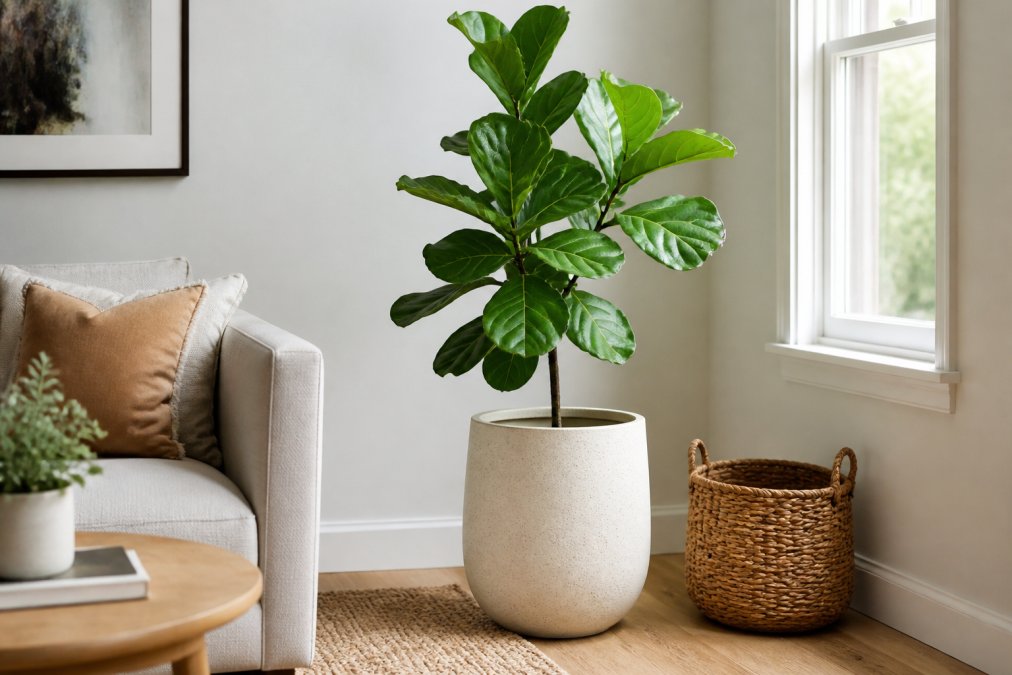
If you prefer classic materials, terracotta remains a reliable choice because its porous walls help soil dry evenly. For a more decorative look, The Green Goddess Plant Pot at £20.89 adds sculptural elegance. Whichever you choose, ensure the pot is 2-4cm larger in diameter than the current nursery pot.
| Pot Option | Price | Best For | Key Feature |
|---|---|---|---|
| Hydrating Herbert | £14.99 | Forgetful waterers | Self-watering system |
| Hydrating Hettie | £14.99 | Busy households | Self-watering system |
| Green Goddess Pot | £20.89 | Style-focused homes | Sculptural ceramic design |
| Standard Terracotta | Varies | Traditionalists | Natural breathability |
Fiddle Leaf Fig Drainage Requirements: Why Holes Matter
Fiddle leaf fig drainage requirements are simple: water must never sit stagnant around the roots. Drainage holes are the primary defence against root rot, the leading cause of fiddle leaf fig death in UK homes.
A pot with adequate drainage should have holes covering roughly 5-10% of the base area. Pair this with a drainage tray to protect your floors. When you water, do so thoroughly until water runs freely from the bottom, then empty the tray after 30 minutes.
Terracotta and unglazed ceramic allow moisture to evaporate through their walls, while plastic and glazed ceramic trap it inside. Materials that support evaporation give you more flexibility with watering schedules and reduce the risk of waterlogged soil.
Indoor Plant Pot Sizes: Choosing the Right Diameter
Indoor plant pot sizes for fiddle leaf figs follow a simple rule: choose a pot 2-4cm larger in diameter than the current root ball. Going too large risks overpotting, where excess soil holds water longer than the roots can absorb it; going too small restricts growth and can cause the plant to become root-bound.
For a young fig in a 15cm nursery pot, move to a 17-19cm pot. A mature fig in a 25cm pot will need a 27-29cm pot at most. Resist the urge to jump several sizes at once.
Pot depth matters too. Fiddle leaf figs develop deep root systems, so choose a pot roughly as deep as it is wide, shallow, wide bowls are unsuitable.
Terracotta vs. Ceramic vs. Self-Watering Pots
The material you choose doesn't just affect looks, it directly dictates your watering schedule. For a fiddle leaf fig, which prefers consistently moist (but never soggy) soil, this correlation is critical.
Terracotta: The High-Maintenance Option
Terracotta is unglazed clay, making it highly porous. Water migrates through the walls and evaporates, actively pulling moisture from the soil. In a centrally heated room (20-22°C), a terracotta pot can dry out 30-40% faster than a sealed plastic pot, meaning you'll likely need to water every 3-4 days in summer. The benefit is a massive margin for error, overwatering is nearly impossible. The trade-off is weight: a 30cm pot weighs around 8-10kg empty and over 15kg when filled with damp soil. It also develops an attractive patina but can leave white mineral deposits on your floor without a saucer.
Glazed Ceramic: The Aesthetic Middle Ground
Glazed ceramic is terracotta's opposite, the glaze seals the clay, making the pot non-porous. Water can only escape through the drainage hole, slowing evaporation significantly, so you might water only every 7-10 days. This is ideal if you travel often or neglect your plants. However, the risk of waterlogging increases because the soil stays wet longer, so check soil moisture with your finger before watering. Glazed pots are also the heaviest option; a decorative 30cm pot can weigh 12-15kg empty, so ensure your floor or plant stand can support the weight.
Self-Watering: The Consistency Solution
Self-watering pots use a reservoir at the base that wicks moisture upward into the soil as it dries, providing a steady, consistent moisture level that fiddle leaf figs crave. They eliminate the boom-and-bust cycle of drench-and-dry that stresses the plant. Choose a design with a clear water-level indicator so you can refill only when needed. In a cool, draughty room, a self-watering pot might keep soil too wet, so monitor the first few weeks. They are also significantly lighter than ceramic or terracotta.
The Direct Impact on Your Watering Routine
| Pot Material | Typical Watering Frequency (UK room, 20°C) | Porosity | Weight (30cm pot, filled) | Risk Level |
|---|---|---|---|---|
| Terracotta | Every 3-4 days | High | 15-18kg | Low (dries fast) |
| Glazed Ceramic | Every 7-10 days | None | 18-22kg | High (if overwatered) |
| Self-Watering | Refill reservoir every 1-2 weeks | Medium | 8-12kg | Low (regulated) |
| Plastic (Nursery) | Every 5-7 days | None | 3-5kg | Medium |
For most UK homes with central heating, dry air accelerates evaporation. A self-watering pot like Hydrating Herbert or Hydrating Hettie provides a buffer against this dryness without the daily attention terracotta demands. If you prefer the look of ceramic, use it as a cachepot, keep your fig in a lightweight plastic nursery pot with drainage and slip it inside the decorative shell.
How to Repot a Fiddle Leaf Fig Without Shock
Repotting is stressful for a fiddle leaf fig, but doing it correctly minimises the shock and sets the tree up for vigorous growth.
When to Repot
Repot every 12-18 months, ideally in early spring (March-April in the UK) when the fig is entering its active growth phase. Avoid winter repotting, as roots will struggle to recover. Signs your fig needs repotting include roots circling the top of the soil, roots emerging from drainage holes, or water running straight through the pot without being absorbed.
Step-by-Step Repotting Guide
- Water thoroughly 24 hours before. This hydrates the roots and makes them more flexible, reducing breakage during handling.
- Prepare the new pot. Ensure it has drainage holes and is only 2-4cm larger in diameter than the current pot. Add a layer of fresh potting mix at the base, about 2-3cm deep, so the root ball will sit 2-3cm below the rim.
- Remove the fig gently. Tilt the pot sideways and slide the root ball out, supporting the base of the stem with one hand. If it's stuck, run a knife around the inside edge to loosen it. Never pull the trunk.
- Inspect and loosen the roots. Gently tease apart the root ball with your fingers, especially if it's root-bound. Remove any dark, mushy, or foul-smelling roots, these are signs of rot. Trim away any dead material with clean scissors.
- Position the fig. Place the root ball in the new pot, ensuring the top sits 2-3cm below the rim. This space allows for watering without overflow.
- Backfill with fresh mix. Use a well-aerated potting mix specifically for indoor plants, amended with perlite or orchid bark to improve drainage. Fill around the roots, pressing down gently to eliminate air pockets. Do not compact the soil, roots need air.
- Water thoroughly. Water until liquid runs freely from the drainage holes. This settles the soil around the roots. Empty the saucer after 30 minutes.
Post-Repotting Care
Your fig may drop a few lower leaves within the first two weeks, this is normal transplant stress, not failure. Keep the plant in bright, indirect light and do not fertilise for at least 6-8 weeks; the fresh potting mix contains enough nutrients.
Soil Composition Matters
Standard garden soil is too dense for fiddle leaf figs in containers. It compacts over time, suffocating roots and trapping water. Use a mix of:
- 60% high-quality indoor potting mix, provides structure and nutrients
- 20% perlite, ensures aeration and drainage
- 20% orchid bark or coarse sand, adds texture and prevents compaction
This combination allows water to flow freely while retaining enough moisture for the roots. If you're using a self-watering pot, this mix is particularly important because it must wick moisture upward efficiently without becoming waterlogged.
Common Potting Mistakes That Harm Your Fig
The most damaging potting mistakes are overpotting, skipping drainage, and using the wrong potting media. Overpotting keeps soil wet for extended periods and invites root rot.
Skipping drainage holes is the fastest way to kill a fiddle leaf fig. If you're using a decorative planter without holes, keep your fig in a nursery pot inside and remove it to water. Soil compaction is another overlooked issue, use a well-aerated potting mix with perlite or similar amendments.
Final Verdict: Your Fig's Perfect Home
The best plant pots for fiddle leaf figs prioritise drainage, breathability, and appropriate size above all else. Whether you choose classic terracotta, glazed ceramic, or a self-watering design depends on your watering habits and home environment.
At Quirky Turkey Gifts, we've helped over 100,000 customers find gifts that bring joy to their spaces. Our Hydrating Herbert and Hydrating Hettie self-watering pots take the guesswork out of plant care. Pair your new pot with a Plant Life Support automatic waterer at £12.99 for complete peace of mind while you're away.

Frequently Asked Questions
Do fiddle leaf figs like self-watering pots?
Yes, fiddle leaf figs can thrive in self-watering pots, provided the pot includes a proper drainage system. A well-designed self-watering pot delivers water from the bottom, encouraging deep root growth and preventing overwatering, which is the leading cause of root rot. The Hydrating Herbert and Hydrating Hettie pots are excellent examples. They maintain consistent moisture levels, which fiddle leaf figs love, and are perfect for busy plant owners who might forget a weekly watering schedule.
Do fiddle leaf figs prefer to be root-bound?
Fiddle leaf figs prefer to be slightly root-bound rather than over-potted. A snug fit encourages the plant to produce healthy, dense roots before focusing on leaf growth. However, when roots start circling the pot's bottom or emerging from drainage holes, it's time to repot. When choosing a new pot, select one that is only slightly larger in diameter than the current nursery pot. This prevents overpotting, which can lead to waterlogged soil and root rot.
How do I ensure proper drainage in decorative plant pots?
The simplest method is the 'pot-in-pot' technique. Keep your fiddle leaf fig in a plain nursery pot with drainage holes, and place that pot inside your decorative ceramic or quirky planter. This allows excess water to drain freely into the outer pot without soaking the roots. Alternatively, if your decorative pot has a drainage hole, use a drainage tray beneath it. Never let your fig sit in standing water, as this suffocates the roots and encourages fungal growth.
What size pot should I choose for a mature fiddle leaf fig?
For a mature fiddle leaf fig, the key is to match the pot size to the root ball, not the height of the plant. This provides enough fresh potting media for nutrients without holding excess water that can cause root rot.
What is the best material for a fiddle leaf fig pot?
Terracotta is often considered the best material for fiddle leaf figs because it is porous, allowing air and moisture to pass through the walls, which helps prevent overwatering and root rot. However, terracotta dries out quickly and can be heavy. Glazed ceramic pots retain moisture longer and come in more decorative designs, but require careful watering. Plastic pots are lightweight and cheap but offer poor breathability. For most UK homes, a glazed ceramic pot with drainage holes strikes the best balance.
Choosing the right pot for your fiddle leaf fig comes down to understanding how moisture moves through different materials and matching that to your watering routine. The perfect pot keeps roots healthy, supports steady growth, and looks great in your home. Explore the collection at Quirky Turkey Gifts and find a planter that makes both you and your fig smile.


