
How to Avoid Damaged Gift Deliveries: 7 Protection Steps

Table of Contents
- Why Damaged Gift Deliveries Happen
- Step 1: Choose High-Quality Protective Materials
- Step 2: Master Proper Cushioning Techniques
- Step 3: Fill Empty Space to Prevent Movement
- Step 4: Document Your Gift Before It Ships
- What to Do If a Parcel Arrives Damaged
- Common Packaging Mistakes to Avoid
- Sustainable Packaging Alternatives That Still Protect
- Frequently Asked Questions
Last Updated: September 18, 2026
Why Damaged Gift Deliveries Happen
Fragile items face genuine risks during transit. Parcels get dropped, stacked under heavier boxes, and jostled around in delivery vans. Even the most careful courier can't prevent every accident.
Most people focus on making gifts look pretty inside the box, forgetting that parcels will be thrown, compressed, and exposed to impact from multiple angles before arrival.
Poor packaging leads to disappointed customers, a beautiful plant pot or quirky decoration arrives in pieces, and the whole experience turns sour.
You can avoid damaged gift deliveries with protective packaging, proper cushioning, and smart documentation.
Step 1: Choose High-Quality Protective Materials
Material quality is your first line of defence. Thin boxes collapse, cheap bubble wrap pops, and flimsy tape fails mid-transit.
Invest in these materials:
- Double-walled cardboard boxes - stronger than single-walled, resists crushing
- Bubble wrap - at least 12mm thickness for maximum protection
- Kraft paper or crinkle fill - biodegradable alternatives to packing peanuts
- Packing tape - heavy-duty, 48mm width minimum
- Foam sheets or corners - extra protection for high-risk items
A sturdy outer container prevents crushing damage. Quality boxes stay rigid under weight and impact.
For quirky gifts like decorative plant pots, avoid thin packaging at all costs.
Step 2: Master Proper Cushioning Techniques
Cushioning prevents items from moving inside the box and absorbs impact when parcels are bumped or dropped.
Here's the technique that works:
Layer 1: Bottom cushioning Add 5cm of bubble wrap or foam to the bottom of the box. This catches impact from drops and prevents the item from hitting the base.
Layer 2: Wrap the item Wrap your gift thoroughly. For fragile items, use multiple layers of bubble wrap. Overlap each wrap so no part of the item is exposed. Secure with tape as you go.
Layer 3: Side protection Place foam sheets or bubble wrap along all four sides of the wrapped item. This protects against lateral impacts during transport.
Layer 4: Top cushioning Add another 5cm of cushioning above the item before sealing the box.
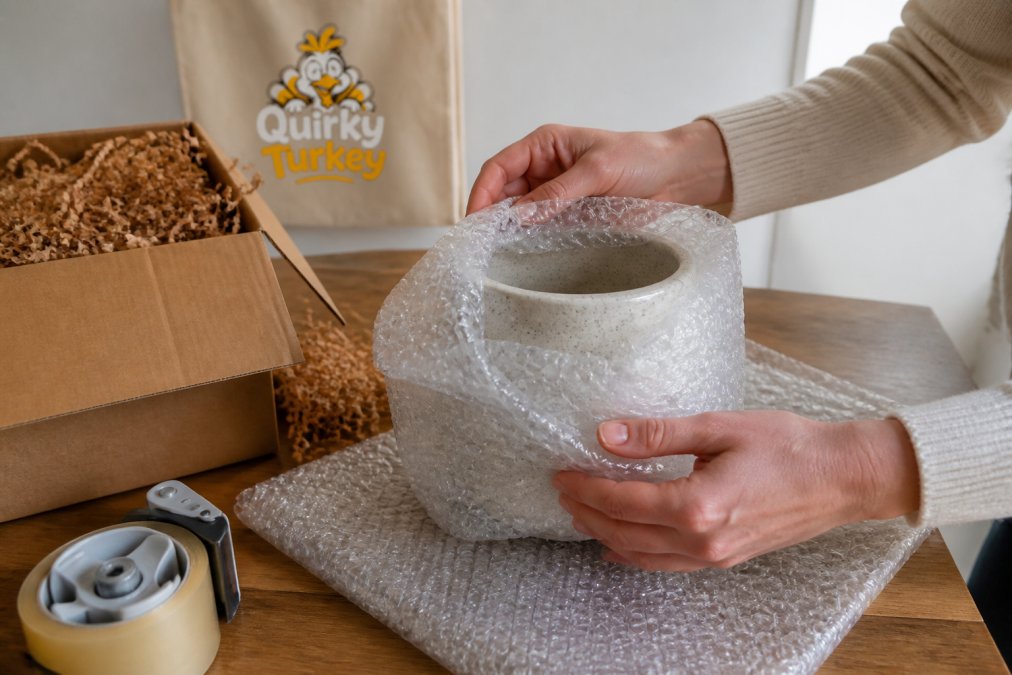
Redundancy ensures that if one layer fails, others catch the impact.
Step 3: Fill Empty Space to Prevent Movement
Empty space causes items to shift during transit, creating impact when they hit box walls.
Fill every gap:
- Use crinkle fill, shredded paper, or packing peanuts to pack around the cushioned item
- Pack tightly so the item cannot move side to side
- Add filler above the item until it reaches the top of the box
- The item should feel snug but not compressed
For oddly shaped gifts, use foam sheets cut to fit the space for better movement prevention.
Movement inside the box causes far more damage than expected.
Step 4: Document Your Gift Before It Ships
Take photos and video before the parcel ships. Clear documentation is your strongest evidence if damage occurs, directly affecting your chances of a successful claim.
What to Document
Capture these elements:
Item condition
- Close-up photos from multiple angles (front, back, sides)
- Show delicate areas, seams, or joints in detail
- Use natural daylight or bright indoor lighting
- Include a ruler or coin for scale on small items
Packaging quality
- Photos of sealed box showing all tape seams (top, bottom, sides)
- Close-up of tape overlap
- Wide shot of entire exterior before shipping
Interior protection
- Photograph cushioning layers, wrapping, foam sheets, and filler material in place
- This proves adequate protection if a retailer questions your packing
Shipping label and proof
- Photograph the address label and tracking number clearly
- This links the documentation to the specific parcel
How to Photograph Effectively
Lighting matters Use natural daylight or bright indoor lighting. Avoid shadows, which can make minor marks look like major damage.
Angle and focus Take multiple angles of fragile items. For ceramics or glass, photograph base, rim, and body separately. Capture text, patterns, or identifying marks.
Metadata and timestamps Don't edit or filter photos. Retailers may request metadata to verify authenticity.
Video as backup For high-value or fragile items, record a short video as you wrap and pack, narrating your steps. This proves your packing method if the retailer questions your technique.
Where to Store Your Documentation
Use cloud storage to ensure access even if your device is lost or damaged.
Best practices:
- Email photos to yourself immediately after packing
- Upload to cloud storage with a folder named by order number and date
- Keep documentation for at least 6 months after delivery
If damage occurs and you need to make a claim, you'll have instant access to proof. Without this documentation, retailers may assume damage happened before shipping or deny your claim entirely.
What to Do If a Parcel Arrives Damaged
Document the damage with clear photos of the parcel exterior, damaged item, and crushed sections. Keep everything, retailers need to see packaging to assess damage. Contact the retailer within 48 hours with photos and pre-shipping documentation, explaining what happened and what you're requesting.
How to Report Damaged Delivery to Your Retailer
Use the right channel Use email to create a written record of your complaint.
Provide essential information: order number, purchase date, damage description, photos of damaged item and packaging, and what you're requesting.
Be factual, not emotional, retailers respond better to clear, professional communication.
Follow up if needed within 5-7 business days if you don't hear back.
Understanding Your Rights Under the Consumer Rights Act 2015
Under the Consumer Rights Act 2015, goods must be of satisfactory quality and fit for purpose. You have the right to a replacement, full refund, or repair at no cost. Report damage within 30 days of delivery.
Retailers are responsible for ensuring goods reach you in good condition. If they arrive damaged, the retailer must make it right.
Consumer Rights Act 2015 guidance explains your full rights.
Common Packaging Mistakes to Avoid
Learning what NOT to do saves time and prevents damage. Beyond standard fragile-item errors, certain gifts require specialised protection that most people overlook.
Standard Packaging Mistakes
Mistake 1: Using the wrong box size Match the box to your item with about 5cm of space on all sides.
Temperature-Sensitive and Perishable Gifts: Special Considerations
Gifts like artisan chocolates, beauty products, plants, or food hampers face temperature damage risks. Heat, cold, and humidity can ruin these items even with perfect packaging.
Quirky decorative items with special materials Some decorative gifts, resin art, wax melts, candles, or items with adhesive elements, are sensitive to heat or pressure.
- Candles and wax products: wrap individually and use thermal packs in summer to prevent melting or warping
- Resin or adhesive-based items: avoid stacking heavy items on top; use foam corners for extra protection
- Items with delicate finishes: wrap in tissue first, then bubble wrap, to prevent the wrap from marking the surface
When to Use Specialist Couriers for Temperature-Sensitive Items
For high-value or particularly sensitive gifts, standard courier services may not be sufficient. Some couriers offer temperature-controlled or insulated delivery options, though these cost more. Evaluate this option if:
- The gift is expensive or irreplaceable
- It's shipping during summer or winter extremes
- The item is perishable or has a short shelf life
- The recipient is far away, extending transit time
For most gifts, proper insulation and thermal packs are sufficient. But for luxury food hampers or delicate fresh items, a specialist courier may be worth the investment.
Sustainable Packaging Alternatives That Still Protect
Protecting your gift doesn't require wasteful materials. Sustainable options offer real protection without guilt.
Frequently Asked Questions
What are my rights if my goods are damaged during delivery in the UK?
Under the Consumer Rights Act 2015, if your gift arrives damaged, you have the right to reject it or request a full refund within 30 days of delivery. If the damage is the retailer's responsibility, they must either repair, replace, or refund the item at no cost to you. Keep all packaging and documentation as evidence. Courier liability varies depending on the carrier's terms, but retailers remain responsible for ensuring goods arrive in acceptable condition.
How should I report a damaged gift delivery to a retailer?
Contact the retailer immediately with photographic evidence of the damage, the original packaging, and your order number. Most retailers have a returns or claims process on their website. Document everything: take photos of the damaged item from multiple angles, the packaging condition, and any courier handling marks. Keep the original box and all protective materials. The retailer will typically arrange a replacement or refund once they assess the damage claim.
How can I tell if a parcel has been damaged before I open it?
Inspect the external packaging for visible signs: crushed corners, dents, tears, water damage, or leaking contents. If the box feels suspiciously light or items shift inside, this suggests internal damage. Open the parcel carefully and photograph any damage before removing items. If you notice damage upon arrival, document it immediately with photos and contact the retailer. Don't discard packaging until the claim is resolved.
What protective materials work best for shipping fragile gifts?
Bubble wrap, packing peanuts, and shredded paper are industry standards for cushioning fragile items. Bubble wrap provides excellent impact resistance, while packing peanuts fill void spaces and prevent movement. For eco-conscious shipping, consider biodegradable packing peanuts or shredded paper. Combine multiple layers: wrap the item in bubble wrap, place it in a smaller box surrounded by cushioning, then place that box in a larger outer box with additional void fill. This multi-layer approach significantly reduces transit damage risk.


