
Decorative Garden Treasures for Small Spaces

Table of Contents
- Why Decorative Garden Treasures Matter in Compact Outdoor Areas
- Small Garden Decoration Ideas That Maximise Visual Impact
- Unique Garden Ornaments for Patios That Add Character
- Budget-Friendly Upcycling and DIY Garden Treasures
- Choosing the Right Containers and Pots for Small Spaces
- Lighting Solutions and Seasonal Rotation Strategies
- Frequently Asked Questions
Why Decorative Garden Treasures Matter in Compact Outdoor Areas
Small outdoor spaces demand smart choices. A single poorly selected ornament can overwhelm a balcony, but the right decorative garden treasures transform a cramped patio into an enchanting garden design that feels intentional and curated.
At Quirky Turkey Gifts, we understand that compact gardens need personality without clutter. The secret isn't adding more, it's choosing pieces that earn their place. A well-placed feature arch, a strategically positioned mirror, or a handcrafted garden ornament can anchor an entire space and create visual depth where square footage is limited.
Decorative garden treasures serve three purposes in small spaces: they become focal points that draw the eye, they add character that reflects the gardener's taste, and when chosen thoughtfully, they maximise the perception of space itself.
Small Garden Decoration Ideas That Maximise Visual Impact
Vertical Planting and Wall-Mounted Solutions
Vertical planting transforms unused wall space into a living feature. When floor area is precious, walls become your garden's real estate. Trellises, wall-mounted planters, and climbing ivy create the illusion of a larger garden whilst keeping the ground clear for movement and seating. A balcony with trailing plants cascading down a wall feels less confined than one where everything sits at ground level.
Consider these vertical solutions: galvanised planters mounted at varying heights to create rhythm, wrought iron arches that frame climbing plants and create a garden focal point, wall-mounted terracotta pockets for herbs and small succulents, and mirrors positioned behind climbing vines to amplify light and perceived depth.
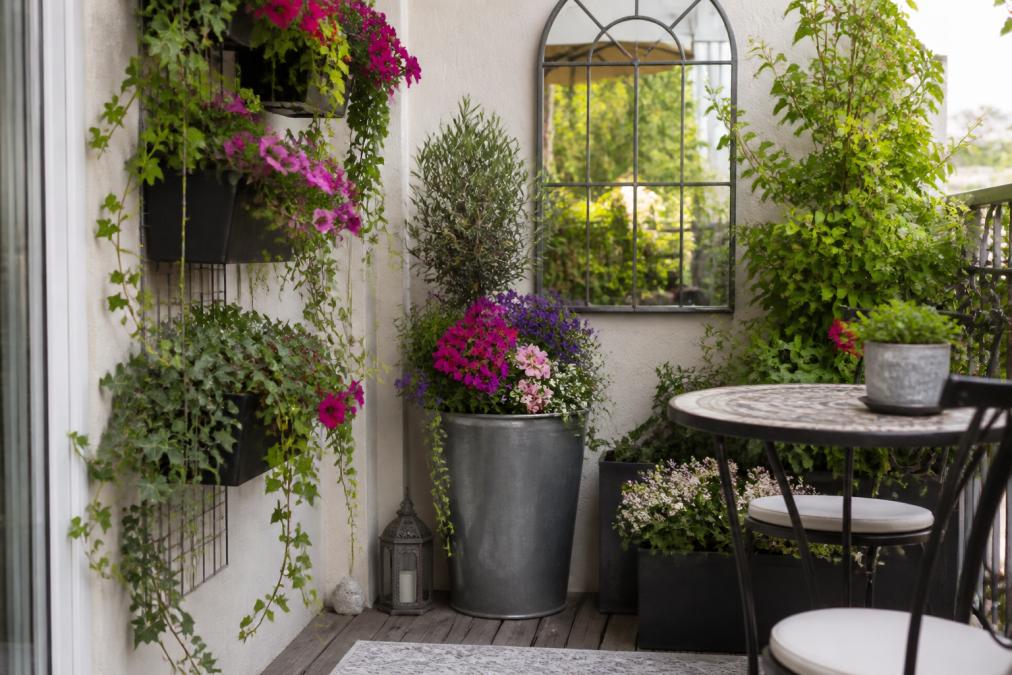
Vertical systems dry out faster than ground-level containers, so choose drought-tolerant plants or invest in self-watering mechanisms.
Oversized Containers as Focal Points
A single large container anchors a small garden better than three small ones scattered about. Oversized containers command attention and create a sense of intentionality. A container that's 40-50cm tall in a compact patio becomes a sculptural element. Pair it with trailing plants that soften the edges, and you've created a garden focal point without taking up much footprint.
Using Mirrors to Create Depth
A strategically placed mirror is the oldest trick in the small-space playbook. Position a mirror to reflect plants, sky, or light, and your garden suddenly feels twice as large. Weatherproof mirrors designed for outdoor use are essential, standard mirrors will corrode and fail within months. Look for outdoor-rated glass with UV-protective backing.
Unique Garden Ornaments for Patios That Add Character
Garden Statues and Whimsical Figures
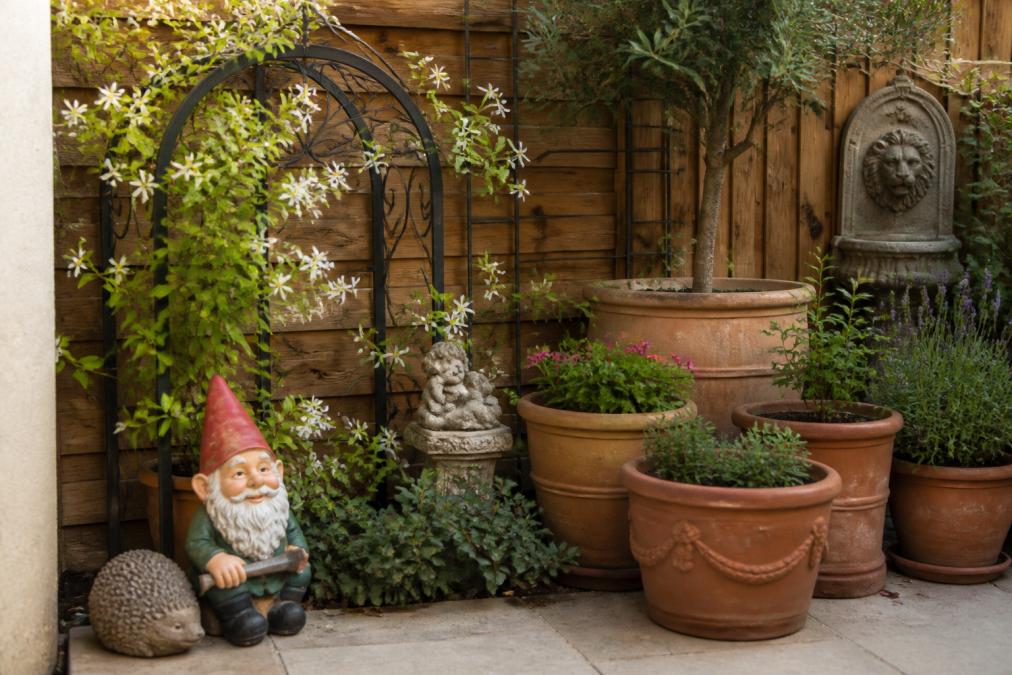
Garden statues anchor a space emotionally and become conversation starters. Whimsical figures work well because they break the seriousness of a compact space. A quirky garden gnome standing 15-20cm tall brings humour without overwhelming a small area.
Quirky Turkey Gifts offers weather forecasting gnomes standing 15cm tall, available in three colours, each with a humorous twist on predicting the weather. They're made from durable terracotta and arrive boxed for gifting.

Feature Arches and Trellises
Feature arches serve dual purposes: they're structural elements that define space and decorative installations that add vertical drama. In a small garden, an arch becomes a threshold, a visual marker that separates one area from another. Wrought iron arches age beautifully, weathering to a rich patina that improves over time.
Budget-Friendly Upcycling and DIY Garden Treasures
Small spaces reward creative upcycling. A weathered wooden crate becomes a vertical planter. An old ladder transforms into a tiered plant display. Vintage terracotta pots, sourced secondhand, cost a fraction of new ones and carry character that new ceramics can't match.
For those without the DIY inclination, Quirky Turkey Gifts stocks affordable ornamental pieces that don't feel mass-produced. The Set of 4 Mini Garden Gnome Plant Pot Pals brings whimsy at an accessible price point. These terracotta figures arrive with stakes for easy positioning in planters or fairy gardens.

Choosing the Right Containers and Pots for Small Spaces
Material Durability and Weather Resistance
Container choice determines whether your garden treasures last one season or ten. In the UK climate, frost damage is the primary threat. Terracotta absorbs moisture, and when temperatures drop below freezing, that water expands inside the clay and causes hairline cracks that widen each winter.
Galvanised steel and composite materials handle UK weather far better. Galvanised planters are lightweight, weather-resistant, and age beautifully without maintenance. The zinc coating protects the underlying steel for 15-20 years in typical garden conditions. Ceramic and stoneware offer a middle ground, high-fired ceramics (fired above 1200°C) resist frost damage significantly better than low-fired terracotta.
Wood planters add warmth but demand rigorous maintenance. Untreated softwood rots within 18-24 months in the UK. For small spaces where maintenance time is limited, metal or ceramic outperform wood. Resin and composite planters mimic stone or wood aesthetics while offering durability, frost-proofing, and minimal maintenance.
Sizing and Proportions for Compact Areas
Container size should match plant needs. The practical rule is straightforward: the container should be 2-3cm larger in diameter than the root ball, with room for growth. For a compact patio, this often means containers 30-45cm in diameter, large enough to establish healthy plants, small enough to avoid overwhelming the space.
Proportion matters visually too. A 15cm tall gnome looks intentional on a 40cm container. Group containers in odd numbers (3 or 5, not 4) and vary heights by 10-15cm to create visual rhythm without clutter. Ensure every container has at least one drainage hole at the base.
Weatherproofing and Seasonal Maintenance
Even durable materials benefit from proactive weatherproofing. Terracotta and natural stone should be sealed with a breathable masonry sealer before the first winter. This reduces water absorption and extends the lifespan by 3-5 years.
Wood planters need annual attention. In autumn, inspect for soft spots or rot, sand any rough patches, and apply exterior wood stain or sealant. Metal containers rarely need maintenance, but galvanised pots in coastal areas benefit from occasional rinsing to prevent corrosion.
In winter, move tender containers to sheltered spots or wrap them in horticultural fleece if frost is forecast.
Quirky Turkey Gifts's Hydrating Herbert and Hydrating Hettie self-watering plant pots stand 21cm tall and are made from durable composite material. The built-in watering system reduces daily maintenance.

Lighting Solutions and Seasonal Rotation Strategies
Outdoor Lighting for Small Spaces
Outdoor lighting transforms a small garden after dark and can make a compact patio feel larger by creating depth through shadow and highlight. Solar lights are budget-friendly and require no wiring. String lights create ambiance without taking up floor space; they can be strung overhead between walls or around a feature arch, drawing the eye upward.
For small patios, focus lighting on key features rather than attempting to light the entire area. Uplighting behind plants or ornaments creates dramatic shadows and makes the garden feel larger.
Seasonal Rotation: A Strategy to Prevent Clutter and Maintain Freshness
Small gardens get cluttered easily. A patio that feels intentional in spring can feel overcrowded by midsummer if every seasonal plant and ornament stays in place year-round. Seasonal rotation is a practical strategy that keeps the space feeling fresh, intentional, and manageable.
The rotation system works by dividing your decorative treasures into three categories:
Permanent fixtures (stay year-round): These are your anchor pieces, a feature arch, a large focal-point container, a garden statue that defines the space. Choose 2-3 permanent pieces maximum.
Seasonal primary pieces (3-4 months each): These are the plants, smaller ornaments, and lighting that change with the season. Summer might feature bright trailing plants and colourful gnome figures. Autumn calls for deeper tones and ornamental grasses. Winter is the gnome's moment. Spring brings pastels and fresh growth.
Accent pieces (rotate monthly or as desired): Small items like decorative plant stakes, seasonal signs, or tiny figurines that can be swapped without major effort.
Planning and Storage for Seasonal Rotation
Successful rotation requires planning and accessible storage. In autumn, photograph your spring and summer layouts so you can recreate them without guesswork. Storage is critical. Seasonal pieces need a weatherproof, accessible location: a garden shed, garage shelf, or weatherproof storage box. Label containers clearly so you can find pieces quickly.
For those without dedicated storage space, consider a compact weatherproof garden storage box (typically 100-150 litres). These are proportionate to small patios and keep seasonal treasures protected from frost, damp, and pests.
Rotation timing matters too. Spring rotation (March-April) prepares the garden for the growing season. Summer rotation (June) refreshes the space mid-season. Autumn rotation (September) introduces deeper tones and prepares for winter. Winter rotation (December) adds festive or whimsical elements.
Why Rotation Works for Small Spaces
Rotation prevents decision fatigue. Instead of trying to fit every decorative treasure into a small space simultaneously, you're curating a focused collection for each season. This makes the garden feel intentional rather than cluttered.
Rotation also extends the lifespan of your treasures. Ornaments stored indoors during harsh weather experience less weathering. A ceramic gnome rotated seasonally will outlast one left outside year-round by several years.
Finally, rotation keeps you engaged with your garden. The act of swapping pieces forces you to notice what's working, what needs maintenance, and what no longer brings you joy.
Frequently Asked Questions
How can I make a small garden look beautiful on a budget?
Focus on affordable decorative garden treasures like terracotta gnomes (from £2.75) and small ceramic planters that add personality without breaking the bank. Upcycle old containers with paint or weathered finishes, use mirrors to amplify visual space, and choose multi-purpose pieces like self-watering pots that combine function with charm. Seasonal rotation of ornaments keeps your space fresh without constant purchases.
What decorative garden treasures work best in shaded small spaces?
Choose light-coloured ornaments like cream or pale green pots to brighten darker corners. Whimsical figures such as gnomes and hedgehog planters add character even in limited light. Wall-mounted planters and vertical solutions maximise space without relying on sunlight. Mirrors positioned strategically reflect available light and create the illusion of depth, making compact shaded areas feel larger and more inviting.
How do I choose decorative accents for a compact outdoor area?
Prioritise pieces that serve dual purposes, like self-watering plant pots that are also decorative focal points. Consider scale carefully; oversized containers create impact in small spaces without overcrowding. Select a cohesive colour palette or style (rustic, modern, whimsical) to avoid visual clutter. Weather-resistant materials like terracotta and dolomite ensure your treasures last through seasons without maintenance headaches.
What are the best ways to add character to a small balcony or patio?
Layer your decorative garden treasures vertically using wall-mounted planters, tiered shelving, and feature arches. Include whimsical ornaments like garden gnomes or decorative statues as focal points. Use plant misters and water sensors as functional art pieces. Combine different container sizes and materials, galvanised, terracotta, ceramic, to create visual interest without consuming precious floor space.
This article was written using GrandRanker


