
Cute Indoor Plant Pots for Monstera: A 2026 Buyer's Guide

Table of Contents
- Why Choosing the Right Pot Matters for Your Monstera
- Best Pot Size for Monstera: Getting the Dimensions Right
- Drainage Holes for Indoor Plants: Why They're Non-Negotiable
- Terracotta vs Plastic Pots for Monstera: Material Comparison
- Cute Pot Styles for Monstera That Elevate Your Space
- Indoor Plant Pot Comparison Table
- Styling Your Monstera Pot: Design Tips for Every Interior
- When to Repot Your Monstera and How to Choose the Next Pot
Last Updated: August 9, 2026
Why Choosing the Right Pot Matters for Your Monstera
The pot you choose for your Monstera isn't just about aesthetics, it's the foundation of your plant's health. A poorly selected pot can lead to root rot, stunted growth, or a plant that simply refuses to thrive. The right pot balances drainage, stability, and visual appeal, transforming your Monstera into a stunning focal point of your home.
At Quirky Turkey Gifts, we've helped over 100,000 customers find cute indoor plant pots for monstera that work as hard as they look good. The difference between a thriving plant and a struggling one often comes down to three things: pot size, material, and drainage. This guide walks you through every factor that matters, so you can choose with confidence.
Best Pot Size for Monstera: Getting the Dimensions Right
The ideal pot size for a Monstera depends entirely on the plant's current size. A young Monstera thrives in a pot with a diameter 2.5-5 cm larger than its root ball, while a mature plant may need a pot with a diameter of 25-35 cm. Measure your Monstera's current root ball, not the plant's height. If it's currently in a 15 cm pot and the roots are filling that space, move up to a 20 cm pot. Skipping directly to 30 cm means excess soil will retain moisture long after your plant's roots have absorbed what they need.
For very large, mature Monstera specimens, 1.2-1.5 metres tall with thick stems, you're looking at 30-40 cm pots. These larger plants need weight-bearing pots that won't tip over when the plant gets top-heavy. Terracotta and ceramic are better choices here than plastic, which can feel unstable with a heavy, mature plant inside.
Drainage Holes for Indoor Plants: Why They're Non-Negotiable
Drainage holes for indoor plants are not optional, they're essential. A Monstera sitting in waterlogged soil will develop root rot within weeks. Every pot you choose must have at least one drainage hole, preferably more if the pot is large.
When you water, excess moisture needs somewhere to go. Without drainage, that water sits against the roots, blocking oxygen and creating conditions where fungi and bacteria thrive. With drainage holes, water flows through the soil and out the bottom, aerating the root zone and preventing the anaerobic conditions that kill roots.
If you fall in love with a pot that doesn't have drainage holes, use it as a cachepot, a decorative outer pot, and nest a draining pot inside it. This gives you the aesthetic you want plus the drainage your Monstera needs. Just lift the inner pot out after watering to let excess water drain completely before returning it to the cachepot.
For self-watering pots, drainage becomes even more critical. Look for self-watering options with overflow holes that prevent the reservoir from overfilling. Hydrating Herbert and Hydrating Hettie self-watering plant pots from Quirky Turkey Gifts include this safety feature, ensuring your Monstera gets consistent moisture without the risk of waterlogging.
Terracotta vs Plastic Pots for Monstera: Material Comparison
Terracotta, ceramic, and plastic each bring different strengths to the table.
Terracotta is porous, meaning it breathes. Water evaporates through the pot walls, drying soil faster than other materials. This is fantastic if you tend to overwater. The drawback? In dry climates or heated homes, terracotta can dry out too quickly, requiring more frequent watering. Terracotta also breaks easily if dropped and is heavy, making it impractical for hanging planters.
Ceramic sits in the middle ground. It's less porous than terracotta, so soil dries more slowly, but it's still breathable enough to prevent waterlogging. Ceramic pots are durable, come in endless styles and colours, and look polished in any room. The Wildflower Ceramic Plant Pot and Hello Sunshine Beautiful Plant Pot with 3D Sunflower from Quirky Turkey Gifts are ceramic options that combine function with genuine character.

Plastic is lightweight and affordable, making it ideal for large pots or hanging arrangements. However, plastic doesn't breathe, so soil stays moist longer. If you water on a schedule rather than checking soil moisture, plastic can lead to overwatering problems. Plastic also degrades in sunlight, so it's best reserved for indoor use away from direct windows.
| Material | Drying Speed | Durability | Weight | Best For |
|---|---|---|---|---|
| Terracotta | Fast | Moderate (breakable) | Heavy | Overwatering-prone growers |
| Ceramic | Moderate | High | Moderate | Most plant parents |
| Plastic | Slow | High | Light | Hanging or large pots |
For a Monstera, ceramic offers the best balance. It's forgiving if your watering isn't perfect, it looks beautiful, and it provides enough stability for larger plants.
Cute Pot Styles for Monstera That Elevate Your Space
Character Planters with Personality
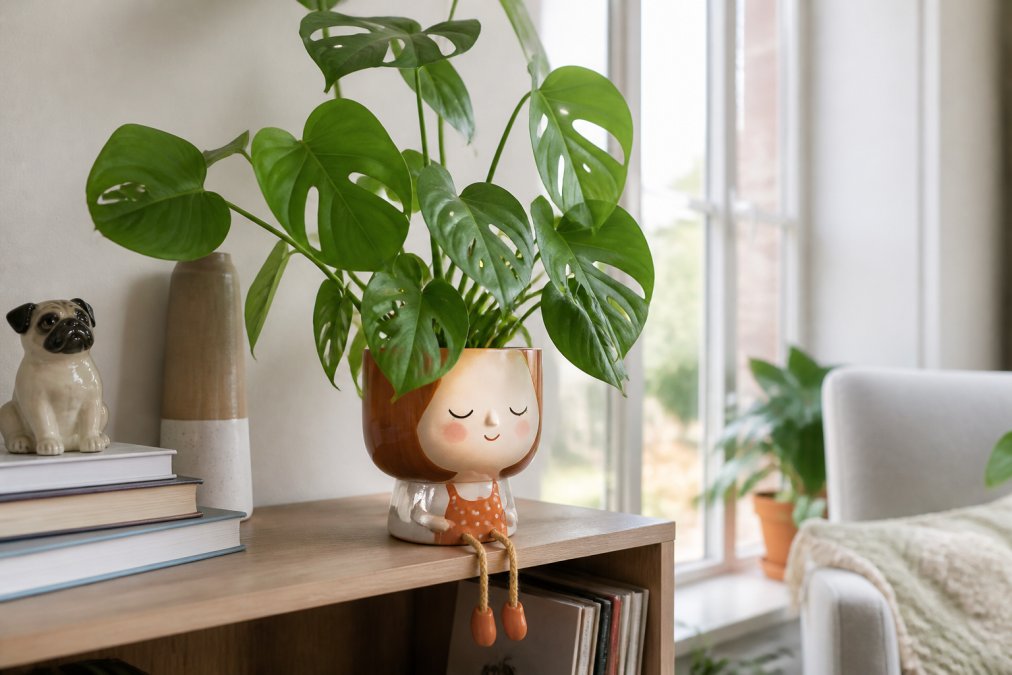
Character planters transform a simple houseplant into a conversation piece. These pots have faces, limbs, or whimsical designs that add humour and warmth to any room. The Plant Mum Planter with Dangling Legs and Blue Shoes from Quirky Turkey Gifts is exactly this, a dolomite planter with personality that makes people smile the moment they see it.
The magic of character planters is that they work in almost any interior. A modern minimalist space gets softened by a cheeky face planter. A bohemian room gets even more eclectic charm. If you love woodland themes, the Hettie the Hedgehog Planter Bowl brings cosy forest vibes. Character planters typically come in ceramic or dolomite and are usually smaller (15-20 cm), making them ideal for younger Monstera plants.
Ceramic Designs with Botanical Prints
Botanical prints on ceramic pots create a sophisticated, nature-inspired aesthetic that complements a Monstera beautifully. These designs, wildflowers, ferns, sunflowers, or abstract leaf patterns, echo the plant itself, creating visual harmony on your shelf or side table.
The Wildflower Ceramic Plant Pot features British wildflower varieties, giving it distinctly local charm. The Hello Sunshine Beautiful Plant Pot with 3D Sunflower adds dimension with its raised design, catching light in ways flat prints can't. Both work in farmhouse, cottage, or contemporary spaces because botanical themes are timeless.
Ceramic botanical pots often come in neutral bases, white, cream, sage green, with coloured or metallic details. This restraint makes them versatile and pairs well with other décor without competing for attention.
Self-Watering Quirky Options
Self-watering pots solve one of plant parenthood's biggest challenges: inconsistent watering. These pots include a reservoir system that keeps soil at optimal moisture, releasing water as the plant needs it. Hydrating Herbert and Hydrating Hettie combine self-watering functionality with character design, so your Monstera gets care and charm.
Self-watering pots work brilliantly for people with unpredictable schedules, those prone to underwatering, or anyone who travels occasionally. The reservoir typically lasts 2-3 weeks. For the best results, use a potting mix specifically formulated for self-watering systems, as standard potting soil can compact and block water flow.
Indoor Plant Pot Comparison Table
| Pot Style | Size Range | Material | Best For | Drainage |
|---|---|---|---|---|
| Character Planters (Plant Mum) | 15-20 cm | Dolomite/Ceramic | Younger plants, personality lovers | Good |
| Botanical Ceramic (Wildflower) | 20-25 cm | Ceramic | Aesthetic appeal, versatile décor | Good |
| Self-Watering (Hydrating Hettie) | 20-25 cm | Ceramic with reservoir | Busy plant parents, consistent moisture | Excellent |
| Face Planter (Matte Pink) | 15-20 cm | Ceramic | Modern minimalist, quirky accents | Good |
Styling Your Monstera Pot: Design Tips for Every Interior
The pot you choose should complement your home's overall aesthetic. A Monstera in the right pot becomes a design element; in the wrong one, it's just a plant taking up space.

Modern Minimalist spaces pair beautifully with ceramic pots in solid colours, matte black, soft white, or sage green. The Face Hanging Planter in Matte Pink and Matte Black works here because its geometric simplicity matches the aesthetic. Avoid character planters or busy botanical prints in minimal spaces.
Bohemian and eclectic rooms are where character planters shine. Mix and match styles, a whimsical face planter next to a botanical ceramic, both at different heights. The Hettie the Hedgehog Planter Bowl adds woodland charm that feels at home in a room full of macramé, rattan, and vintage finds.

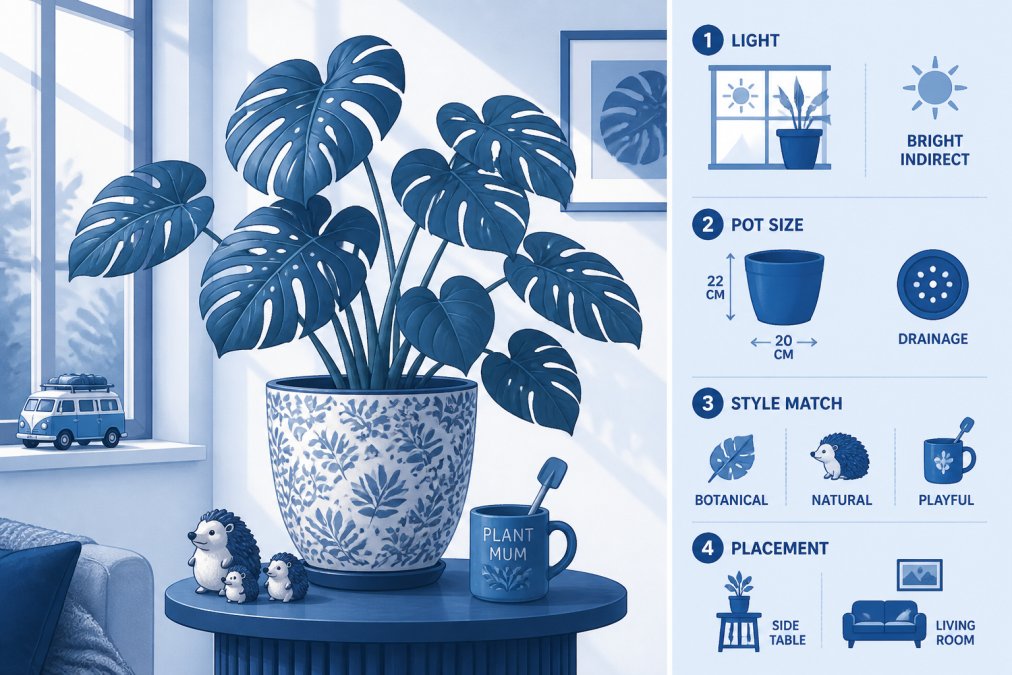
Scandinavian and contemporary spaces appreciate clean aesthetics with natural materials. A Monstera in a ceramic pot with a subtle botanical print, or in a natural wood stand, feels at home. These spaces value function and beauty equally.
Cottage and farmhouse interiors welcome botanical prints and character. The Wildflower Ceramic Plant Pot speaks this language. Pair it with natural wood shelving, vintage books, and soft textiles for a cohesive look.
Maximalist spaces can handle bold colours and multiple styles. Layer different pot types, sizes, and designs. A Monstera in a statement pot becomes part of a curated collection rather than standing out awkwardly.
The trick to styling is asking: does this pot feel like it belongs in my space? If it makes you smile when you look at it, it belongs.
When to Repot Your Monstera and How to Choose the Next Pot
Repotting is necessary when your Monstera becomes root-bound, when roots have filled the current pot and have nowhere left to grow. Signs include roots circling the soil surface, water running straight through without absorbing, or the plant drying out faster than usual. Most Monstera plants need repotting every 18-24 months during the growing season (spring and early summer).
When repotting, move up only one pot size. If your Monstera is in a 25 cm pot, move to a 30 cm pot, not a 35 cm. Use fresh potting mix, as old soil becomes compacted and loses structure over time. Gently loosen the root ball before placing it in the new pot, then fill around it with fresh mix.
Choosing the next pot follows the same principles as your initial choice: consider drainage, material, and aesthetics. If the current pot has served well, you might upsize in the same style. If you want to refresh your plant's look, repotting is the perfect time to swap to something new. The Green Goddess Plant Pot is an elegant option for a larger Monstera that's ready for an upgrade.
Timing matters. Repot in spring when your Monstera is actively growing and can recover quickly from the disturbance. Avoid repotting in winter when growth slows. If your plant is thriving and not root-bound, don't repot just because you like a new pot. When in doubt, wait another few months and check again.
Frequently Asked Questions
What type of pots do Monsteras like?
Monsteras thrive in pots with drainage holes and materials that balance moisture retention with aeration. Ceramic, terracotta, and plastic all work well, depending on your watering habits. Ceramic and terracotta are porous and dry faster, making them ideal if you tend to overwater. Plastic retains moisture longer, suiting those who underwater. The most important factor is drainage, without it, your Monstera risks root rot. Look for pots with at least one drainage hole and a matching saucer to catch excess water.
Do Monsteras like deep or shallow pots?
Monsteras prefer pots that are slightly wider than they are deep. A pot that's too deep can hold excess moisture around the roots, increasing root rot risk. Aim for a pot diameter about 2-5cm larger than your plant's root ball. A shallow to medium-depth pot encourages healthy root development and makes repotting easier. If your Monstera is large with aerial roots, a slightly deeper pot can accommodate the root system, but avoid oversized containers that stay too wet.
Should I use a plastic nursery pot inside a decorative pot for my Monstera?
Yes, this is an excellent approach. A plastic nursery pot with drainage holes inside a decorative cachepot gives you the best of both worlds: proper drainage for plant health and a cute, styled look for your space. The nursery pot sits inside the decorative pot, allowing water to drain freely without damaging furniture or floors. This method also makes repotting and watering easier, and you can swap out decorative pots seasonally without disturbing the plant. Just ensure the inner pot's drainage holes aren't blocked.
How do I know if my Monstera is root-bound and needs a bigger pot?
Signs your Monstera is root-bound include roots growing through drainage holes, slow growth despite good care, water running straight through the pot without absorbing, and the plant drying out very quickly. Check by gently removing the plant from its pot, if roots circle the soil surface densely or wrap around the root ball, it's time to repot. Move up one pot size (typically 2-5cm larger in diameter) to give roots room to grow. Repot in spring or early summer when your Monstera is actively growing for best results.
Are self-watering pots good for Monsteras?
Self-watering pots can work for Monsteras if you struggle with consistent watering. They feature a water reservoir that gradually releases moisture, reducing the risk of underwatering. However, Monsteras prefer soil that dries slightly between waterings, so self-watering systems may keep soil too wet in humid environments or during cooler months. They work best in warm, dry conditions. If you choose a self-watering option like Hydrating Herbert or Hydrating Hettie from Quirky Turkey, monitor soil moisture closely and adjust your watering schedule seasonally to prevent overwatering.
Finding the right cute indoor plant pots for monstera means balancing three things: what your plant needs to thrive, what your home's aesthetic demands, and what brings you genuine joy. Quirky Turkey Gifts offers options at every price point and style preference, from the whimsical Plant Mum Planter to the sophisticated Green Goddess pot, all backed by super-fast delivery and unbeatable value. Your Monstera deserves a pot that works as hard as it grows.
This article was written using GrandRanker


