
Best Ceramic Plant Pots for Succulents: 2026 Picks

Table of Contents
- Quick Comparison: Best Ceramic Plant Pots for Succulents
- How We Chose These Ceramic Plant Pots
- Why Drainage Holes for Succulent Pots Are Non-Negotiable
- Ceramic vs Terracotta for Succulents: Which Wins?
- The Best Ceramic Plant Pots for Succulents: Our Picks
- Pot Size, Depth and Weight: Getting the Spec Right
- How to Repot Succulents into Ceramic Pots
- Conclusion
- Frequently Asked Questions
Last Updated: September 16, 2026
Quick Comparison: Best Ceramic Plant Pots for Succulents
Choosing the best ceramic plant pots for succulents comes down to one thing: drainage. Ceramic holds moisture longer than terracotta, so a pot without holes can be problematic for a succulent's roots. This guide from Quirky Turkey Gifts & Gadgets walks through drainage, sizing, glazing and weight, then picks the ceramic pots we would actually put a succulent in.
Here's how our top picks compare at a glance:
| Pot | Price | Material | Best For | Drainage |
|---|---|---|---|---|
| Wildflower Ceramic Plant Pot | £8.99 | Ceramic | Small succulents | Check base |
| The Green Goddess Plant Pot | £20.89 | Ceramic | Statement displays | Check base |
| Hettie the Hedgehog Planter Bowl | £7.99 | Dolomite | Cacti, small plants | Bowl, no hole |
| Hydrating Herbert / Hettie | £14.99 | Self-watering | Forgetful waterers | Reservoir system |
| Floral Welly Boot Planter | £13.99 | Ceramic | Windowsills | Check base |
How We Chose These Ceramic Plant Pots
We judged each pot on drainage potential, material, size and how well it suits a succulent's shallow, drought-tolerant root system rather than on looks alone. A pot can be beautiful and still be unsuitable for a plant, so aesthetic appeal came second to plant health.

Our criteria:
- Material and breathability - glazed ceramic versus unglazed clay, and what each does to moisture retention
- Drainage - whether holes exist, or can be added safely
- Size and depth - matching a shallow root system to a shallow planter
- Weight and stability - important for top-heavy succulents and cacti
- Value and gifting appeal - because many of these pots double as presents
Why Drainage Holes for Succulent Pots Are Non-Negotiable
Drainage holes for succulent pots are the single most important feature. Succulents store water in their leaves and stems, so they need a potting mix that dries out fast. Without an escape route, water pools at the bottom, roots sit wet, and root rot sets in within weeks.
DIY Drainage Hole Drilling for Ceramic Pots
You can add a hole to an unglazed ceramic pot with a diamond-tipped drill bit and a little patience. This can turn a decorative planter into a functional one.
- Soak the pot in water for 30 minutes to reduce cracking
- Mark the centre of the base with a pencil
- Fit a diamond-tipped hole saw to your drill
- Run the drill at low speed with light, steady pressure
- Keep the bit cool with a trickle of water
- Sand the rim of the hole smooth once drilled
Ceramic vs Terracotta for Succulents: Which Wins?
Ceramic vs terracotta for succulents is a trade-off between looks and breathability. Terracotta is porous, so it wicks moisture through the walls and dries out faster, which suits succulents well. Ceramic, especially glazed, holds moisture longer and gives you far more colour and finish options.
| Feature | Terracotta | Glazed Ceramic | Unglazed Ceramic |
|---|---|---|---|
| Breathability | High | Low | Medium |
| Moisture retention | Low | High | Medium |
| Evaporation through walls | Yes | No | Yes |
| Colour and finish choice | Limited | Wide | Moderate |
| Best for | Beginners, cacti | Statement displays | Balanced care |
Glazed vs Unglazed Ceramic: What Changes
The glaze is the deciding factor. A glazed finish seals the surface, so the pot no longer breathes and water only leaves through the drainage hole. That means you water less often and rely entirely on the hole and the potting mix.
The Best Ceramic Plant Pots for Succulents: Our Picks
These are the ceramic and characterful planters we would reach for first, matched to the plant and the spot they suit best. Every one comes from Quirky Turkey Gifts & Gadgets, a UK gift shop trusted by over 100,000 customers.
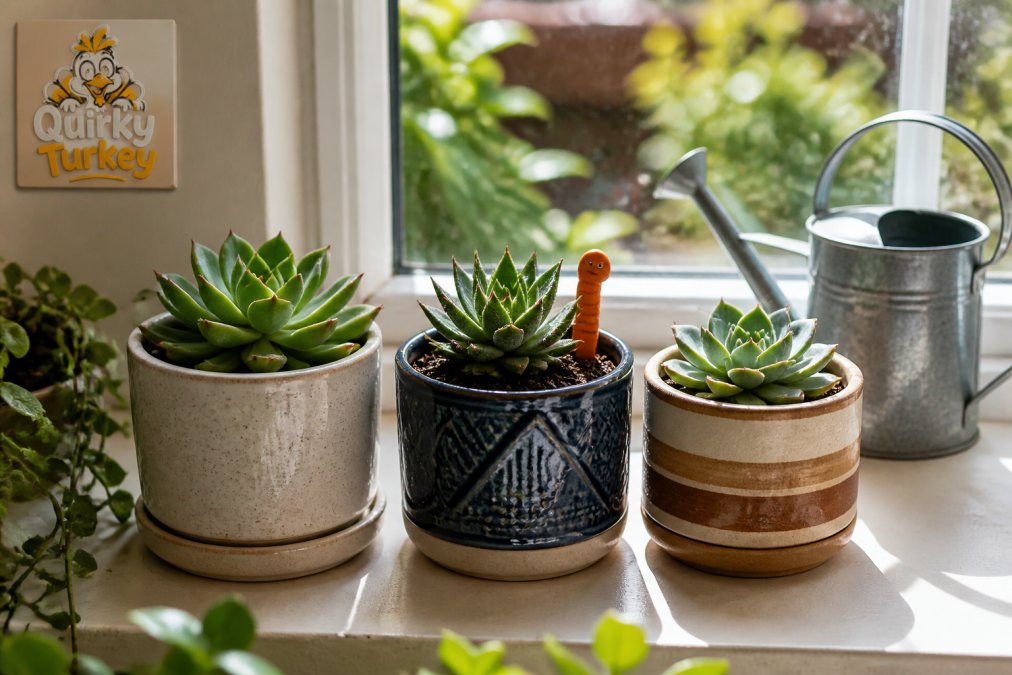
Wildflower Ceramic Plant Pot: Best Small Ceramic Pot
The Wildflower Ceramic Plant Pot (£8.99) is our pick for a single small succulent. At H13cm x W11.3cm x D11.3cm, it suits an echeveria or a compact rosette, and the wildflower design makes it a ready-made housewarming or birthday gift.
The Green Goddess Plant Pot: Best Statement Ceramic Pot
For a focal point, The Green Goddess Plant Pot (£20.89) brings a sculpted, jade-toned silhouette that works on a patio, balcony or living room shelf. It handles bold succulents and cascading ivies alike.

Hettie the Hedgehog Planter Bowl: Best for Cacti
Hettie the Hedgehog Planter Bowl (£7.99) is a shallow dolomite bowl (L12 x W10 x H7cm) that suits cacti and small plants. Its sleepy woodland design makes it a year-round gift for nature lovers.

Hydrating Herbert and Hettie: Best Self-Watering Ceramic Pots
If you forget to water, Hydrating Herbert and Hydrating Hettie (£14.99 each) are the answer. These 21cm gnome planters use a self-watering system that regulates moisture, giving roots what they need without overdoing it. Herbert and Hettie both suit a low-maintenance cactus or succulent.
Floral Welly Boot Planter: Best Windowsill Ceramic Pot
The Floral Welly Boot Planter (£13.99) brings cottage-garden charm to a windowsill. At H17cm x W14.5cm x D16.5cm, it suits small succulents and herbs, and the floral print makes it a lovely gift for plant lovers.
Pot Size, Depth and Weight: Getting the Spec Right
| Plant type | Suggested pot width | Suggested depth | Stability note |
|---|---|---|---|
| Compact rosette (echeveria) | 1-2cm wider than spread | 6-8cm | Any shape with a flat foot |
| Trailing succulent | Wide, shallow bowl | 6-8cm | Wide base resists tipping |
| Tall cactus or standard | Just wider than root ball | Deeper to counterbalance | Heavy pot, plant set low |
| Top-heavy aeonium | Wider than the canopy | Moderate | Wide foot, kept off narrow ledges |
Finally, consider the surface the pot sits on. A glazed ceramic base can scratch a wooden windowsill, so a felt pad or a shallow saucer protects the wood and catches drips. A heavy pot on a glass shelf is a risk; keep the heaviest ceramics on solid surfaces and reserve lightweight decorative planters for shelves where they are unlikely to be disturbed.
How to Repot Succulents into Ceramic Pots
How to repot succulents correctly comes down to timing and dryness. Always repot into dry soil, never straight after watering, because damp roots tear more easily and are more prone to rot.
- Water the plant a few days before, then let the soil dry out
- Gently ease the plant from its old pot, supporting the base
- Shake loose the old potting mix from the roots
- Check the new pot has drainage, or drill a hole
- Add a gritty, free-draining potting mix to the base
- Settle the plant so the crown sits above the soil line
- Firm the mix lightly and leave it dry for a few days before watering
Conclusion
Matching a ceramic pot to a succulent's drainage, depth and weight needs is what keeps the plant alive, and the design is what makes it a joy to own. Whether you want a £7.99 hedgehog bowl for a cactus or a self-watering gnome for a busy shelf, the right pot makes care simpler.
Frequently Asked Questions
Do succulents do well in ceramic pots?
Yes, provided the pot has a drainage hole. Ceramic holds shape well, keeps roots stable and comes in finishes that suit most interiors. The one thing to watch is water: a glazed ceramic plant pot holds moisture longer than unglazed clay, so let the potting mix dry out fully between waterings. If the pot has no hole, use it as a cachepot and keep the plant in a separate inner pot you can lift out to drain.
How do you ensure proper drainage in ceramic succulent pots?
Start with at least one drainage hole in the base. Cover the hole with a small piece of mesh or a broken shard so potting mix stays put while water escapes. Use a gritty, free-draining potting mix rather than standard compost, and empty the drainage tray or saucer shortly after watering so the pot never sits in standing water. For pots without holes, drill one or keep the plant in a removable inner pot.
Are glazed ceramic pots safe for succulents?
They are safe, but they behave differently from unglazed clay. A glazed finish seals the surface, so the porous material can no longer wick moisture away and evaporation slows right down. That means you water less often. Check the potting mix with a finger or a terracotta moisture sensor before watering, and choose a pot with a drainage hole so excess water always has a way out.
Do succulents prefer terracotta pots over ceramic?
Terracotta is unglazed and porous, so it pulls moisture through the walls and speeds up evaporation, which suits succulents and cacti that hate sitting wet. Ceramic with a glaze keeps more moisture in, which is handy in a warm, bright room but riskier in a cool one. Both work if the pot has drainage holes and you match your watering to how quickly the potting mix dries out.
Should you repot a succulent straight into a ceramic pot?
You can, but let the plant settle first. Water it a day or two before repotting so the roots are plump, then ease it out and shake off old potting mix. Choose a pot roughly 2cm wider than the root ball, add fresh gritty mix, firm the plant in and wait about a week before watering. This pause can help damaged roots heal and reduce the risk of root rot.
The hardest part of succulent care is matching the pot to the plant, not the plant to the pot. Choose a pot with drainage, size it to the roots, and let the design do the rest. Explore the Quirky Turkey Gifts & Gadgets plant pot range, with characterful designs, boxed gift-ready packaging and unbeatable value, and find a planter that keeps your succulents healthy and your shelf cheerful. Sign in or create an account to get started.


