
How to Choose Durable Garden Pots: A 2026 Guide

Table of Contents
- Why Durable Garden Pots Save You Money Long Term
- The Best Material for Outdoor Plant Pots
- Frost-Resistant Garden Pots for Cold Winters
- Garden Pot Drainage Holes: What to Look For
- How to Choose the Right Pot Size
- Maintenance Tips to Make Durable Garden Pots Last
- Conclusion
- Frequently Asked Questions
Last Updated: 14 October 2026
Why Durable Garden Pots Save You Money Long Term
Cheap pots are the most expensive thing you can buy for your garden. A thin plastic pot that cracks after one winter means you buy again next spring, and again the year after. Over five years, one sturdy pot costs less than three flimsy ones.
That is the whole argument for choosing carefully. Durable garden pots are not about spending more. They are about spending once.
This guide shows you how to pick one that lasts.
Here is what we will cover: which materials hold up outdoors, how frost resistance works, why drainage decides whether roots live or rot, and how to match pot size to plant.
The Best Material for Outdoor Plant Pots
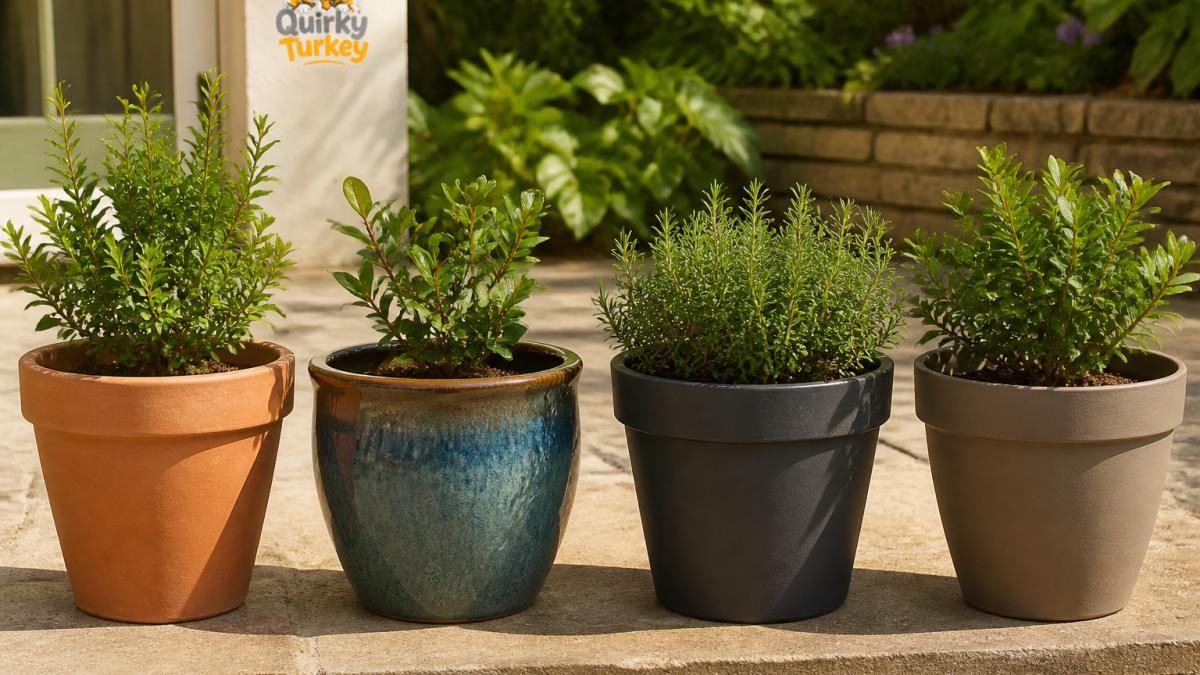
The best material for outdoor plant pots depends on where the pot lives. Terracotta and glazed ceramic suit sheltered spots. Plastic, resin and fibreglass handle exposed patios better. Frost is the deciding factor, not looks.
Terracotta, Ceramic and Glazed Pots
Terracotta breathes, which roots love, but it soaks up water. When that water freezes, the pot can crack from the inside out.
Glazed ceramic fixes that problem. The glaze seals the surface, so less water gets in and frost damage drops sharply.
Our Wildflower Ceramic Plant Pot is a good example. It is ceramic, stands 13cm tall, and comes in a matching box, which makes it easy to gift.

The trade-off? Ceramic is heavy and chips if you drop it.
Plastic, Resin and Fibreglass Options
Plastic is light, cheap and easy to move. Thin plastic goes brittle in sunlight within a season or two, though.
Resin and fibreglass cost more but last far longer. They shrug off UV light, do not shatter when knocked, and stay light enough to shift single-handed.
For balconies and rented spaces, fibreglass is often the smart pick. You get the look of stone without the weight.
Wildflower Ceramic Plant Pot →
| Material | Frost Resistance | Weight | Best For |
|---|---|---|---|
| Terracotta | Low | Medium | Sheltered spots, dry summers |
| Glazed ceramic | Medium | Heavy | Doorways, patios, gifts |
| Plastic | Low | Light | Short-term, budget setups |
| Resin | High | Light | Exposed patios, balconies |
| Fibreglass | High | Light | Large pots, windy sites |
Frost-Resistant Garden Pots for Cold Winters
Frost-resistant garden pots are made from non-porous materials or fired at high temperatures, so trapped water has nowhere to expand. Look for resin, fibreglass, or fully glazed ceramic.
Water expands when it freezes. That expansion is what splits pots. Any pot that absorbs water is a candidate for cracking.
So check three things before winter:
- Does the pot feel porous or sealed?
- Does it have a wide base that sheds water?
- Was it sold as frost-proof, not just "frost-resistant"?
The words matter. "Frost-resistant" means it copes with light frost. "Frost-proof" means it survives a hard freeze.
Garden Pot Drainage Holes: What to Look For
Garden pot drainage holes should sit flat on the base and be at least 1cm across for small pots, wider for large ones. One central hole is rarely enough. Three or more spread evenly works better.
No drainage means soggy compost. Soggy compost means root rot, and root rot kills plants faster than drought.
What to check in the shop:
- Count the holes. Three or more is ideal.
- Check they sit flush with the base, not raised.
- Avoid pots with a single tiny hole in the centre.
If you love a pot with no holes, use it as a cover pot. Keep the plant in a plastic inner pot and lift it out to water.
Our Floral Welly Boot Planter works this way. It suits small plants, succulents and herbs on a windowsill.

How to Choose the Right Pot Size
Choose a pot roughly 2-5cm wider than the plant's current root ball. Going much bigger traps wet compost around the roots and slows growth.
The instinct is to buy big so you never repot again. That backfires. A large pot holds far more compost than small roots can drink, and the excess stays wet.
Use this rule instead:
Wildflower Ceramic Plant Pot →
- Small succulents and herbs: 10-13cm across
- Medium houseplants: 15-20cm across
- Large leafy plants: 25cm and up
Also match the pot to the plant's habit. Trailing plants suit taller pots. Deep-rooted plants need depth, not width.
If you are short on time, a self-watering design takes the guesswork out. Our Hydrating Herbert Self Watering Plant Pot stands 21cm tall and keeps moisture steady for leafy plants, cacti and succulents.

Maintenance Tips to Make Durable Garden Pots Last
A durable pot still needs a little care each season. Five minutes of upkeep can add years to its life.
Try this routine:
- Scrub the outside each spring to clear algae and grime.
- Check drainage holes for compacted compost and clear them.
- Lift pots onto feet or bricks so water drains freely.
- Move ceramic pots under cover before the first hard frost.
- Empty saucers before cold snaps arrive.
For ceramic and glazed pots, avoid harsh cleaners. Warm water and a soft brush do the job without dulling the finish.
Conclusion
Picking a pot that lasts comes down to four checks: material, frost rating, drainage and size. Get those right and you buy once, not every spring.
When you want a pot that looks as good as it performs, we can help. Browse our Green Goddess Plant Pot for a sculpted, long-lasting centrepiece, or explore the full range of characterful plant pots and garden gifts.
Find out more at Quirky Turkey Gifts & Gadgets and give your plants a home that lasts.
Frequently Asked Questions
Which material makes the most durable garden pots?
Glazed ceramic and frost-resistant stoneware last longest outdoors, often 10 years or more with proper care. Terracotta is durable but cracks in hard frost unless labelled frost-proof. Plastic and resin pots resist cracking but can become brittle after years of UV exposure. For a balance of looks and longevity, glazed ceramic or quality resin works well in most gardens.
Are terracotta pots durable outdoors?
Standard terracotta is porous, so water soaks in and expands when it freezes, which cracks the pot. In sheltered spots or mild winters it can last several years. If you want terracotta outdoors, look for frost-proof or frost-resistant terracotta, which is fired at higher temperatures. Even then, raise pots on feet so water drains away from the base.
How can I tell if a garden pot has good drainage?
Turn the pot over and check for at least one drainage hole, ideally 1-2cm across for small pots and larger for big planters. Multiple holes beat a single central one. Avoid pots with saucers fixed in place unless you can empty them. If a pot has no holes, you can drill them if the material allows, or use it as a decorative cachepot with a smaller potted plant inside.
What size pot should I choose for an outdoor plant?
Aim for a pot roughly one-third wider than the plant's root ball, and at least 30cm deep for shrubs and small trees. Herbs and bedding plants are happy in 20-25cm pots. Oversized pots hold too much wet compost and can rot roots, while pots that are too small dry out fast and restrict growth. Check the plant label for the recommended minimum pot size.


