
Which Edible Plant Gifts Suit a New Home Best?

Last Updated: October 31, 2026
Quick Summary
Edible plant gifts suit a new home best when you match the plant to the light: basil, chilli plants and strawberries for a bright south-facing windowsill, and mint or parsley for a shadier kitchen corner. Pair the plant with a pot that has drainage and a short care card.
- Check which way the main window faces before choosing any plant.
- Basil wants four to six hours of direct light a day and steady moisture.
- Keep mint in its own pot or it will crowd out its neighbours.
- Plant strawberries in a pot at least 20cm across with good drainage.
- Water when the top of the soil feels dry, not on a fixed schedule.
Table of Contents
- Why Edible Plant Gifts Work in a New Home
- Easy Herbs to Grow Indoors for a New Kitchen
- Potted Fruit Plants That Earn Their Windowsill
- Choosing a Pot That Fits the Plant and the Home
- Plant Care Tips for Beginners Moving In
- Pet-Safe and Child-Safe Edible Plants
- What to Write in a Housewarming Gift Message for a Plant
- Find Your Edible Plant Gift
- Frequently Asked Questions
Why Edible Plant Gifts Work in a New Home
An edible plant gift is a living present that keeps giving: herbs, fruiting plants and small crops that turn a bare kitchen into somewhere that smells and tastes like home. Edible plant gifts for new homes have become a genuinely useful housewarming choice.
Unlike a candle, it gives the recipient something they can actually use. A small strawberry plant gives a new homeowner something to look forward to.
There is also a quiet symbolic pull: food-growing has long been a housewarming gesture, a way of saying "may this home be well fed." That meaning travels well, whether the recipient is a first-time renter or someone downsizing into a flat.
Light, Space and Growing Conditions to Check First
Before you pick a plant, check the new home's light. This is the step most gift-givers skip, and it decides whether the present thrives or sulks. A bright south-facing windowsill suits basil, chilli plants and strawberries; a shadier kitchen corner is better matched to mint and parsley. A north-facing flat with small windows will struggle with anything that fruits.
Ask three questions before buying:
- Which way does the main window face? South and west mean more sun; north and east mean less.
- Is there a safe windowsill or shelf? A dangling planter needs an edge to hang over; a heavy pot needs a solid surface. If you are weighing up how to choose a novelty planter for your office desk, that guide walks through the practical checks.
- How much space is there really? A small flat may only have room for one pot, so choose a plant that earns its spot.
Easy Herbs to Grow Indoors for a New Kitchen
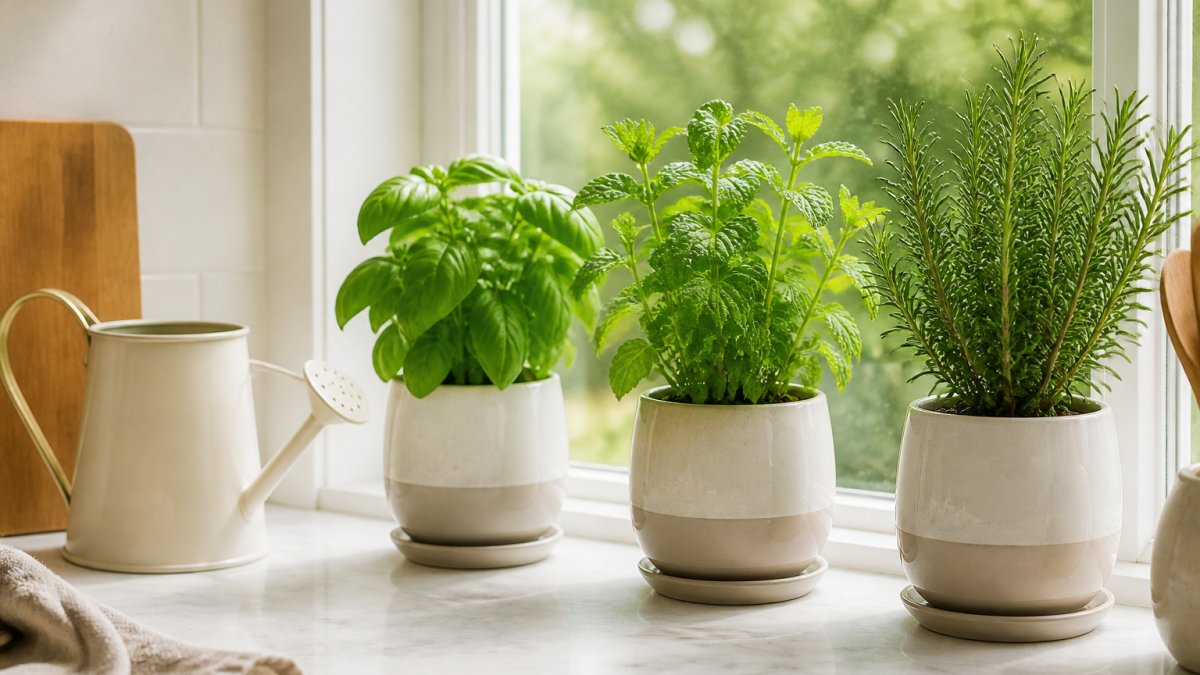
The easiest herbs to grow indoors are basil, mint, rosemary, thyme, parsley and chives, and most will settle happily on a kitchen windowsill.
Basil is the crowd-pleaser and the most rewarding first herb. It wants warmth, four to six hours of direct light a day, and steady moisture without sitting wet.
Mint is nearly indestructible and grows fast, making it the forgiving choice for a recipient who has never kept a plant alive.
Rosemary and thyme are the Mediterranean pair: they want the sunniest spot available and drier compost than basil or mint. Rosemary hates sitting in water, so a pot with a drainage hole is non-negotiable.
Parsley and chives cope with a little less sun than basil and are useful in almost any recipe. Parsley is a biennial, so a gift plant will crop for months before it needs replacing.
A few practical notes make the difference between a gift that lasts and one that fades:
- Pot size matters. A herb crammed into a pot barely wider than its rootball will dry out within a day on a sunny sill.
- Drainage is the single biggest factor. Herbs rot in waterlogged compost far more often than they die of thirst. If the decorative pot has no hole, keep the herb in its inner nursery pot and lift it out to water.
- Feed sparingly. A weak liquid feed every few weeks through the growing season is plenty; overfeeding produces soft, flavourless leaves.
- Harvest little and often. Regular picking keeps herbs productive rather than letting them run to flower and stop.
Potted Fruit Plants That Earn Their Windowsill
Potted fruit plants are the more ambitious edible gift, and the ones worth the windowsill space are strawberries, dwarf tomatoes and chilli plants.
Strawberries are the most forgiving fruiting option and the best introduction. A single pot on a sunny balcony or bright sill will crop, and modern everbearing varieties fruit over a longer window than June-bearing types.
Dwarf tomatoes suit a sheltered, sunny spot and feel like a proper project.
Chilli plants are compact, decorative and productive, and they double as a talking point in a new kitchen. Most varieties want the sunniest, warmest spot in the home and dislike cold draughts.
The honest caveat: fruiting plants ask more than herbs. They want good light, consistent watering and a little feeding, and in a British home the limiting factor is almost always light rather than warmth.
| Plant | Light Needed | Effort | Time to First Harvest | Best For |
|---|---|---|---|---|
| Basil | Bright windowsill | Low | Days | First-time growers |
| Mint | Partial sun | Very low | Couple of weeks | Shady kitchens |
| Rosemary | Full sun | Low | A month or more to settle | Sunny sills |
| Strawberries | Full sun | Medium | Within a season | Balconies and bright sills |
| Chilli plants | Full sun | Medium | Late summer | Keen growers |
| Dwarf tomatoes | Full sun, sheltered | Medium to high | Two to three months | Confident gardeners |
Choosing a Pot That Fits the Plant and the Home
Match the pot to both the plant and the room, and you get something the recipient actually wants to display.
For a new home, a decorative ceramic plant pot is a safe, stylish choice. Our Wildflower Ceramic Plant Pot suits a small herb or succulent, and the Green Goddess Plant Pot works as a statement piece for a more elegant room.
Wildflower Ceramic Plant Pot →


Best for: a plant lover who wants the pot to be part of the gift. Skip if: the recipient already has strong opinions about their decor and would rather choose their own.
Watch out: a pot with no drainage hole will waterlog herbs and rot the roots, so check before you plant. If the planter is purely decorative, keep the herb in its inner pot and lift it out to water.
Plant Care Tips for Beginners Moving In
Plant care for beginners comes down to watering when the soil needs it and giving the plant the light it requires. Check the soil with a finger before watering; if it is still damp, wait.
A simple routine for a new home:
- Water when the top of the soil feels dry, not on a fixed schedule.
- Light matters more than feed; move the plant to a brighter spot before reaching for fertiliser.
- Drainage keeps roots healthy, so empty any water that collects in a saucer.
- Harvest little and often; picking herbs encourages more growth.
A self-watering pot takes some of the guesswork out for busy households. The Hydrating Herbert and Hydrating Hettie designs are self-watering plant pots for indoor plants.
Pet-Safe and Child-Safe Edible Plants
Pet-safe and child-safe edible plants are worth checking before you gift, especially in a home with a cat, dog or toddler. Many common houseplants are not safe if chewed, so choose with the household in mind. Herbs such as basil, mint, rosemary, thyme and parsley are generally grown for eating, which makes them a sensible starting point, but always confirm the specific plant with the recipient's vet or a reliable plant-safety source before gifting.
A few sensible precautions:
- Keep pots on a high shelf or windowsill a pet cannot reach.
- Avoid plants with tempting dangling parts if a cat is likely to bat at them.
- Ask the recipient about pets and small children before choosing.
If you are unsure, a decorative planter paired with a herb the recipient chooses themselves is the safest route. It keeps the gift thoughtful without guessing at a household's needs.
What to Write in a Housewarming Gift Message for a Plant
A housewarming gift message for a plant should be short, warm and specific to the new home. The best notes welcome the recipient to the space, explain the plant in a line, and leave them with a small piece of advice.
Try a simple structure:
"Welcome to your new home. This little basil plant is for your kitchen windowsill; give it sun and a drink when the soil feels dry, and it will keep you in leaves for months. Wishing you every happiness here."
Keep it to two or three sentences. Mention the plant by name, add one care tip, and sign off warmly. If you are gifting a character planter, a light joke about the pot's personality works well.
Find Your Edible Plant Gift
Choosing edible plant gifts for new homes comes down to matching the plant to the light, the pot to the room, and the note to the person. Get those three right and you have a housewarming present that is used, not just displayed.
At Quirky Turkey Gifts & Gadgets, we aim for gifts that make people smile. Our range of cute, characterful plant pots and garden-inspired gifts is designed to make people smile, with over 100,000 customers. Browse our plant pots and garden-inspired gifts to find a gift for a new home.
Frequently Asked Questions
What edible plants make good housewarming gifts?
Herbs are the safest bet because they are useful straight away and tolerate indoor conditions. Basil, mint, rosemary, thyme, parsley and chives all grow well on a kitchen windowsill given decent light and a pot with drainage. Strawberry plants and chilli plants suit a sunnier spot. Match the plant to the recipient's light levels and space before you buy, and check whether they have pets or small children if you are choosing anything other than common culinary herbs.
Which herbs are easiest to grow indoors?
Mint and chives are the most forgiving, followed by parsley and thyme. Basil needs more warmth and light than most people expect, so it does best on a bright south-facing windowsill and sulks in shade. Rosemary prefers a cooler, airier spot and dislikes soggy roots. Whichever you pick, choose a pot with drainage holes, water when the top of the compost feels dry, and keep the plant away from radiators.
Can you give a vegetable plant as a housewarming gift?
Yes, though vegetables are harder to keep productive indoors than herbs. A chilli plant is the most practical choice because it is compact, attractive and crops over a long season. Tomatoes and strawberries need more light and space than a typical new-build windowsill offers. If you want to give a vegetable plant, pair it with a pot large enough for the roots and a short note on light and watering so the recipient knows what it needs.
How do you care for a herb plant indoors?
Give it as much light as the room allows, water when the surface of the compost dries out, and never let the pot sit in water. Feed every couple of weeks through the growing season and pinch out the tops regularly to keep the plant bushy rather than leggy. Most supermarket herbs are grown densely and decline after a few weeks, so repotting into a slightly larger container with fresh compost gives them a much better chance.
What should you write in a housewarming card with a plant?
Keep it short and tie it to the plant. A line like 'May your new kitchen always smell of fresh basil' works better than a generic congratulations because it connects the gift to the home. Mention how much light the plant wants and how often to water it, so the card doubles as care instructions. If you are stuck, one warm sentence about the new home plus one practical tip covers everything the recipient needs.
Ready to send something that grows with the home? Get started with Quirky Turkey Gifts & Gadgets and find a plant pot that brings joy to any space.


