
Best Pots for Large Monstera Plants: The Complete Guide

Table of Contents
- Why Large Monstera Pots Need More Thought Than You Think
- Monstera Pot Size Guide: Getting the Measurements Right
- The Best Pot Material for Monstera Plants
- Pots With Drainage for Monstera: Non-Negotiable Features
- Our Top Picks for Large Monstera Pots
- How to Repot a Large Monstera Without Breaking Your Back
- Stopping a Large Monstera From Tipping Over
- Conclusion
- Frequently Asked Questions
Last Updated: October 19, 2026
Why Large Monstera Pots Need More Thought Than You Think
A monstera that has outgrown its pot will start pushing roots through the drainage holes and heaving itself upward, and at that point the pot stops being decoration and becomes structural. Choosing the best pots for large monstera plants comes down to three things: internal volume, material weight, and drainage. Get those wrong and a two-metre plant will lean, sulk, or crack its own container.
At Quirky Turkey Gifts & Gadgets we spend a lot of time around plant pots. People often buy a beautiful pot first and think about the plant second. With a small succulent that works fine. With a mature monstera, the plant often dictates the choice.
Below, we'll show you exactly how to size, choose and repot a large monstera pot so it looks good and holds up. But first, here's what most guides get wrong: they treat pot size as a cosmetic decision. It isn't. It's a load-bearing one.
Monstera Pot Size Guide: Getting the Measurements Right
The rule for repotting a large monstera is a pot 5cm to 8cm wider in diameter than the current one. Jumping straight to a huge container leaves wet compost around unused roots, which is how root rot starts.
Monstera roots grow thick and fast, and they push outward as much as down. A pot that is too wide gives you a ring of soggy soil the roots never reach. A pot that is too narrow tips over the moment the plant puts on new leaves.
Use this as your sizing reference:
| Current pot diameter | Next pot diameter | Typical plant height | Watch out for |
|---|---|---|---|
| 20cm | 25-28cm | 60-90cm | Roots circling the base |
| 25cm | 30-33cm | 90-120cm | Top-heavy lean |
| 30cm | 35-38cm | 120-150cm | Drainage holes blocked |
| 35cm+ | 40cm+ | 150cm+ | Weight and floor protection |
How to Measure Your Current Pot and Root Ball
Measure across the inside rim of the pot, not the outside, because rim thickness varies between makers. Then slide the plant out and measure the root ball at its widest point. If roots are circling tightly, go up one size and loosen them gently before planting.
The Best Pot Material for Monstera Plants
Terracotta is a good pot material for monstera plants in many homes because it is heavy, stable and porous, so compost dries out faster between waterings. Ceramic and dolomite look sharper but hold moisture longer and weigh less per centimetre.
For a big plant, weight is your friend. A heavy pot resists the lever effect of a tall stem. Porous walls help too, because monsteras hate sitting wet.
Terracotta, Ceramic and Dolomite Compared
- Terracotta: Heavy, breathable, inexpensive, and it ages well. Unglazed versions dry out fastest, which suits monstera roots.
- Ceramic: Glazed inside and out, so it holds water longer. Choose one with a proper drainage hole drilled in the base.
- Dolomite: Dense and decorative, often moulded into character shapes. Excellent for display, but check the base for a drainage hole before you buy.
Pots With Drainage for Monstera: Non-Negotiable Features
Pots with drainage for monstera are not optional. A large monstera needs at least one hole of 2cm or more in the base, plus a saucer or riser so excess water drains clear of the compost.
🌱 The Green Goddess Plant Pot — Elegant Garden Decor →
Check these before you commit:
- Base hole at least 2cm across, ideally three or more
- Saucer deep enough to catch a full watering without overflowing
- Feet or a riser lifting the base off the floor
- Straight-sided interior so the root ball slides out later
- Wide, thick rim that takes the weight when lifted
Our Top Picks for Large Monstera Pots
Our top pick for a statement monstera display is The Green Goddess Plant Pot, £20.89, because its sculpted silhouette and jade-green finish give a big plant visual weight. It is a piece that would be a focal point in a living room corner.

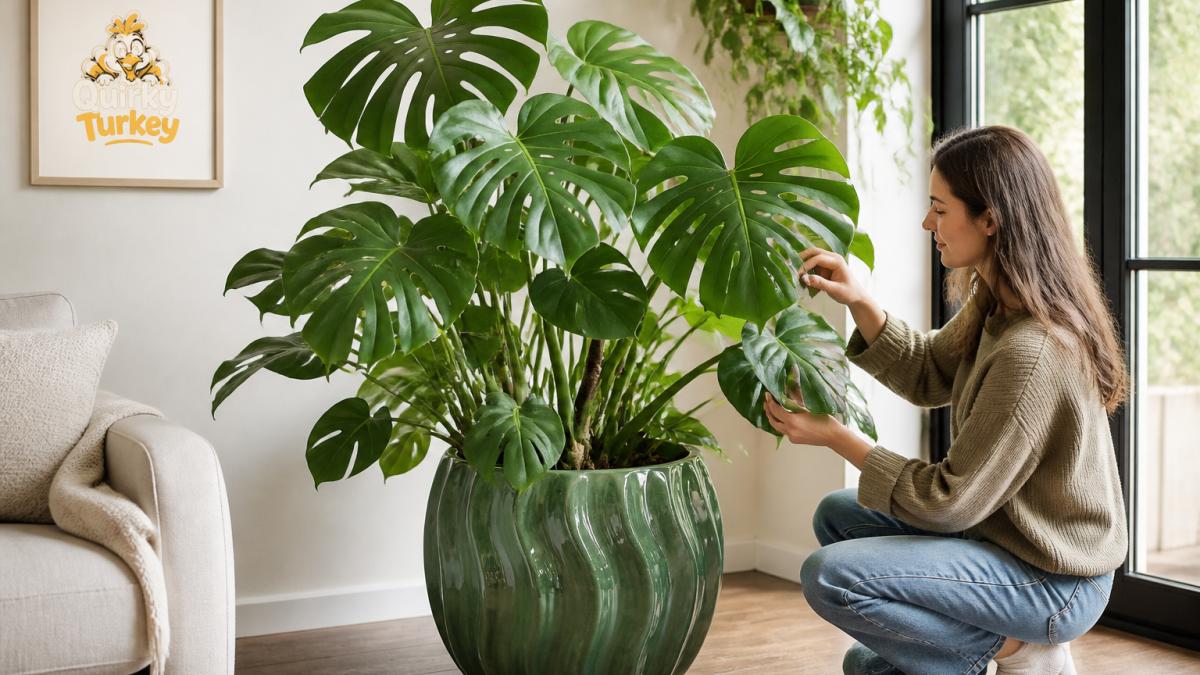
The Green Goddess Plant Pot: The Statement Piece
This is the pot for anyone who wants the container to hold its own next to a two-metre plant. The sculpted shape and jade-kissed colour read as garden sculpture rather than utility plastic, and the proportions balance modern and traditional rooms.
Pros: Strong visual presence, quality construction that stands up to regular watering, and a finish that suits both patios and living rooms. Cons:
Floral Welly Boot Planter: Best for Windowsill Displays
The Floral Welly Boot Planter, £13.99, is the cheerful option for smaller plants, succulents and herbs on a windowsill or kitchen shelf. At H17cm × W14.5cm × D16.5cm it suits a young monstera cutting or a mini fern rather than a mature specimen.
Pros: Cottage-garden charm, a bright floral print, and a shape that looks lovely planted with trailing ivy. Cons: Sized for small plants only, so it is a companion piece rather than a home for your biggest monstera.
For plant lovers building a collection, the Wildflower Ceramic Plant Pot at £8.99 and the Face Hanging Planter at £8.79 cover the smaller end of the range, while the Plant Mum Vase with Mini Planter at £8.99 makes a charming gift for anyone who names their plants.
How to Repot a Large Monstera Without Breaking Your Back
Repot a large monstera by laying the pot on its side, easing the root ball free, and lifting the plant by the base of the stems rather than the leaves. Have the new pot and fresh compost ready before you start so the roots are out of the soil for minutes, not hours.
Work through it in this order:
- Water lightly the day before to bind the root ball.
- Lay the pot on its side and press the sides to loosen it.
- Support the stems at the base and slide the plant free.
- Tease out circling roots with your fingers.
- Add a layer of compost and a handful of grit for drainage.
- Centre the plant, fill around it, and firm gently.
- Water once and let it drain fully before returning it to position.
Stopping a Large Monstera From Tipping Over
Stop a large monstera tipping by weighting the base, widening the footprint, and anchoring the stems. A moss pole pushed to the bottom of the pot ties the plant's energy to a central support and stops the whole thing leaning.
🌱 The Green Goddess Plant Pot — Elegant Garden Decor →
Three fixes that work in practice:
- Weight the base: place a few clean stones in the bottom before adding compost.
- Use a pot with a wider base than rim: a tapered pot resists toppling far better than a straight cylinder.
- Add a support: a coir or moss pole lets you tie stems in with soft twine as they climb.
What most guides miss is that monstera stems naturally reach for light. If the plant leans towards a window, rotate the pot a quarter turn each week rather than fighting it with stakes.
Conclusion
The challenge with a big monstera is that the plant keeps growing and the pot has to keep up. Get the size, material and drainage right, and repotting becomes a once-a-year job rather than a running battle.
We stock characterful plant pots and garden-inspired gifts at Quirky Turkey Gifts & Gadgets, backed by over 100,000 happy customers and express delivery. Browse our plant pots to find a home for your monstera, or pick up something charming for the plant lover in your life.
Find out more about our pots and planters range and give your monstera the container it has earned.
Frequently Asked Questions
What size pot does a large Monstera need?
A large Monstera typically needs a pot 2-5cm wider in diameter than its current root ball. If the plant is already in a 30cm pot, move up to a 33-35cm pot rather than jumping to a much bigger one. Oversized pots hold excess compost that stays wet, which risks root rot. Use the Monstera pot size guide above to measure your root ball before buying, and always check the pot's internal dimensions rather than the external ones.
Do Monstera plants need pots with drainage holes?
Yes, pots with drainage for Monstera plants are essential. Monstera roots are prone to rot if they sit in waterlogged compost, so every pot should have at least one drainage hole at the base. If you love a decorative pot without holes, use it as a cachepot and keep the plant in a slightly smaller nursery pot with drainage inside it. Empty any standing water from the cachepot within an hour of watering to keep roots healthy.
Are terracotta pots suitable for large Monsteras?
Terracotta is a good choice for large Monsteras because it is porous and lets compost dry out more evenly, which suits the plant's preference for slightly dry spells between waterings. A large terracotta pot filled with compost and a mature Monstera can become very heavy and hard to move. Using a saucer can help protect surfaces from water marks.
How often should you repot a large Monstera?
Repot a large Monstera every two to three years, or sooner if roots appear through the drainage holes or the plant dries out within a day or two of watering. The best time is early spring, just as new growth starts. Choose a pot 2-5cm wider than the current one and refresh the compost. Avoid repotting in winter when the plant is resting, as it recovers more slowly from the disturbance.
How can you stop a large Monstera from tipping over?
A heavy pot is the simplest fix: ceramic, terracotta or dolomite pots add ballast at the base and lower the centre of gravity. Place the heaviest part of the root ball centrally, firm the compost around it, and add a moss pole or stake for the stems to lean on. For very top-heavy plants, set the pot on a wheeled saucer or stand so you can reposition it, and keep it away from draughty spots where it might be knocked.


