
Are Handmade Ceramic Plant Pots Worth It? A 2026 Review

Table of Contents
- The Real Cost of Handmade Ceramic Plant Pots
- Why Ceramic Pots Are Better for Your Plants
- Handmade vs Mass-Produced: Durability and Quality
- Choosing Aesthetic Plant Pots for Indoor Plants
- Caring for Handmade Ceramic Pottery
- How Handmade Pots Compare to Plastic and Terracotta
- Conclusion: Are They Worth the Investment?
- Frequently Asked Questions
Last Updated: September 29, 2026
The Real Cost of Handmade Ceramic Plant Pots
Are handmade ceramic plant pots worth it? For most plant lovers, yes, provided you value character, durability and a pot you will keep for years rather than replace each season.

A handmade pot costs more than a plastic one. There is no way around that. What you get in return is a piece with small irregularities, a proper weight in the hand, and a glaze that no moulding machine can copy. If you want a plant to look like it belongs in your home rather than in a shop display, that difference matters.
Below, we break down the costs, the durability, the styling and the care, so you can decide with your eyes open.
Why Ceramic Pots Are Better for Your Plants
Ceramic pots are better for plants because they hold their shape, sit steady, and let roots breathe in a way plastic cannot match. A heavier pot will not topple when a lanky plant leans toward the window.
There is more to it than stability. The benefits of ceramic plant pots come down to three practical things:
- Weight keeps tall plants upright and stops cats knocking them off sills
- Glazed interiors slow water loss, so you water less often
- Thick walls buffer temperature swings near windows and radiators
The one drawback worth knowing: unglazed ceramic dries out faster than plastic, so succulents and cacti thrive while thirsty ferns need closer attention.
Handmade vs Mass-Produced: Durability and Quality
Handmade ceramic generally outlasts mass-produced pottery because the walls are thicker and the firing is slower.
🌱 The Green Goddess Plant Pot — Elegant →
A common mistake is assuming all ceramic is equal. It is not. Hand-thrown and hand-finished pots tend to have denser bodies, and the glaze bonds more evenly during firing.
Choosing Aesthetic Plant Pots for Indoor Plants
Choosing aesthetic plant pots for indoor plants is really about matching three things: the plant's size, the room's light, and the surface the pot will sit on. Get those right and the pot looks intentional rather than accidental.
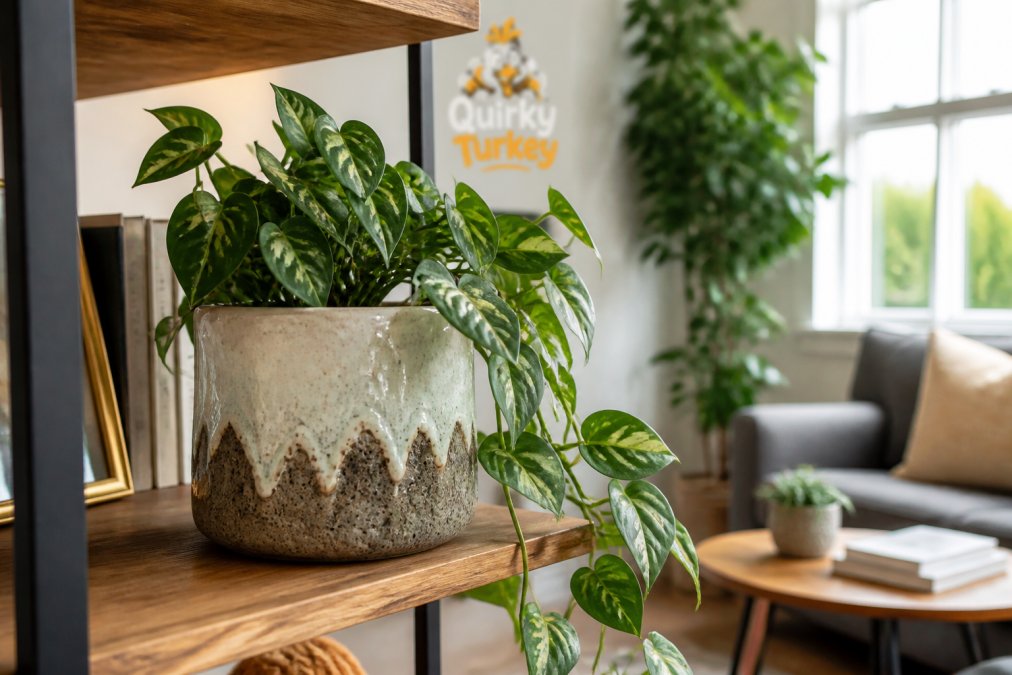
Size is where most people slip up. A small succulent looks lost in anything bigger than 13cm across. Measure your plant's root ball, then go up by roughly 2cm in diameter. Any more and the roots sit in wet soil they cannot use.
For a characterful option, the Wildflower Ceramic Plant Pot sits at H13cm x W11.3cm x D11.3cm, which suits small houseplants and succulents. If you want something with more presence, the Green Goddess Plant Pot is built to hold its own as a focal point on a patio or in a living room.

Caring for Handmade Ceramic Pottery
Caring for handmade ceramic pottery is simpler than most people expect: wipe it, avoid thermal shock, and never put it in a dishwasher. Hand wash with warm water and a soft cloth.
The caring for handmade ceramic pottery routine comes down to a few habits:
- Wipe glazed surfaces with a damp cloth rather than soaking the whole pot
- Never move a pot straight from a cold windowsill to a hot radiator, as sudden temperature changes can crack the glaze
- Lift the plant out before deep cleaning so you do not disturb the roots
- Store spare pots wrapped in newspaper rather than stacked, which chips rims
How Handmade Pots Compare to Plastic and Terracotta
Handmade ceramic sits between plastic and terracotta on cost, and above both on looks. Plastic is cheap and light, terracotta is porous and traditional, and ceramic is the middle ground that holds its finish longest.
| Material | Cost | Weight | Water Behaviour | Best For |
|---|---|---|---|---|
| Plastic | Lowest | Very light | Holds moisture | Budget setups, propagation |
| Terracotta | Low | Medium | Dries fast | Succulents, cacti |
| Handmade ceramic | Higher | Heavy | Slow, steady loss | Feature plants, gifting |
| Dolomite | Low to mid | Light | Holds moisture | Small plants, novelty pots |
The trade-off is honest. Plastic wins on price and survives a knock better than anything else. Terracotta is brilliant for plants that hate wet feet. Handmade ceramic wins when the pot itself is part of the decor, which is exactly why so many people buy one as a housewarming gift.
🌱 The Green Goddess Plant Pot — Elegant →
Conclusion: Are They Worth the Investment?
So, are handmade ceramic plant pots worth it? If you want a pot that survives moves, looks good on a shelf and doubles as a gift, yes. If you just need somewhere to park a spider plant while it recovers, plastic will do the job for less.
The honest caveat is that handmade pots reward a little care.
Choosing a pot that suits both your plant and your space takes a bit of thought, but it is one of the easiest ways to make a room feel finished. At Quirky Turkey Gifts & Gadgets, we stock characterful planters like the Hydrating Herbert Self Watering Plant Pot, which keeps moisture steady for busy owners, and the Floral Welly Boot Planter for windowsills that need a splash of colour. With over 100,000 customers and express delivery, we make it easy to find a pot that makes you smile. Sign in or create an account to get started.
Frequently Asked Questions
Do ceramic pots help plants grow better?
Ceramic pots are fired at high temperatures, which makes them non-porous and helps retain moisture in the soil. This creates a more stable environment for roots compared to porous materials like terracotta, which dry out faster. Handmade versions often have thicker walls that insulate roots from temperature swings, supporting steadier growth for indoor plants.
Are handmade ceramic pots more durable than mass-produced ones?
Handmade ceramic pots are often fired at higher temperatures and have thicker walls, making them more resistant to chipping and cracking. A well-made handmade pot, like the Green Goddess Plant Pot, can last for years with basic care.
How do I know if a ceramic pot is high quality?
Check the weight and thickness. A quality handmade pot feels solid and has an even glaze without bubbles or rough patches. Look for a drainage hole, as this feature indicates thoughtful design and better plant health.
How do you style handmade ceramic pots in a modern home?
Group pots of varying heights and textures to create a focal point. Use neutral-coloured pots for a minimalist look, or choose characterful designs like the Hydrating Herbert Self Watering Plant Pot to add personality. Place them on windowsills, shelves, or side tables where their craftsmanship can be appreciated.


